Christmas Campaign
Dan Murphy

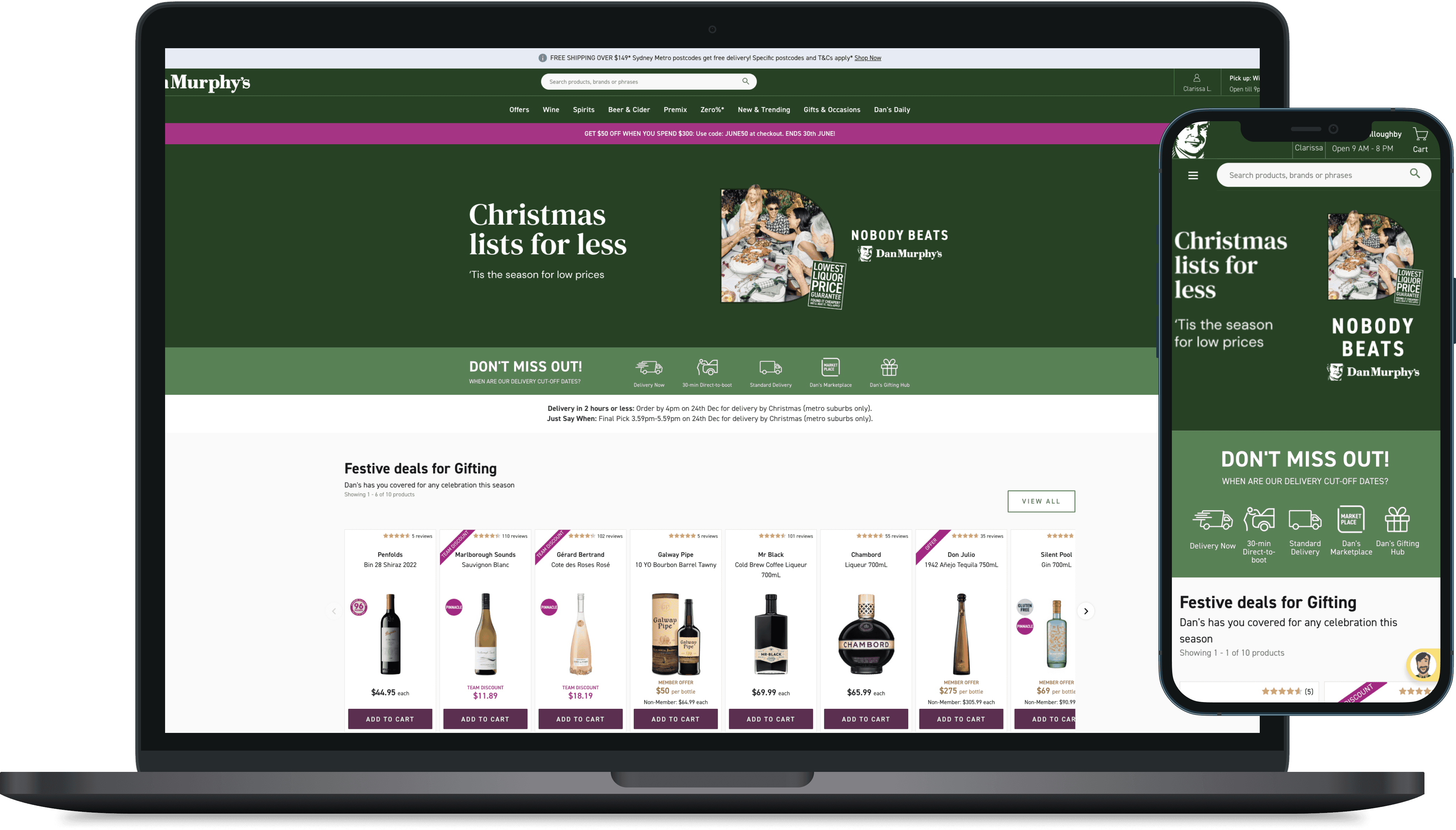
Clearing the Path to Conversion Redesigned the UX for Dan Murphy’s biggest event, Christmas 2024, unlocking $7.4M in revenue. Created a product-first, deal-driven experience to boost engagement and support gifting missions.
Company
Client
Role
Timeframe
Led the UX for Dan Murphy’s biggest event of the year, Christmas 2024, driving $7.4M in revenue and over 624K visits.
I partnered with PMs, marketing, devs, CRO and data teams to redesign the campaign experience across web and app, shifting to a product-led, conversion-first approach.
Despite external challenges like strikes and delays, the optimised design lifted conversion by 28bps and captured 46% of traffic and 51% of orders in the final 9 days. Key wins included simplified navigation, elevated carousels and high-performing gifting content.
My responsibilities for the UX Campaign included:
Reviewing historical data and previous campaign performance to identify UX gaps and improvement areas
Collaborating with CRO and data analysts to extract key behavioural insights and conversion trends
Conducting market and competitor research to benchmark seasonal campaign best practices
Facilitating design jams, stakeholder workshops, and ideation sessions to align on goals and co-create solutions
Creating initial wireframes and evolving them iteratively based on stakeholder, technical, and user feedback
Designing mid-fidelity screens using AEM components to ensure feasibility and a seamless mobile experience
Presenting design decisions and results back to stakeholders, clearly communicating rationale and impact
Miro, Figma, AEM, Adobe Analytics
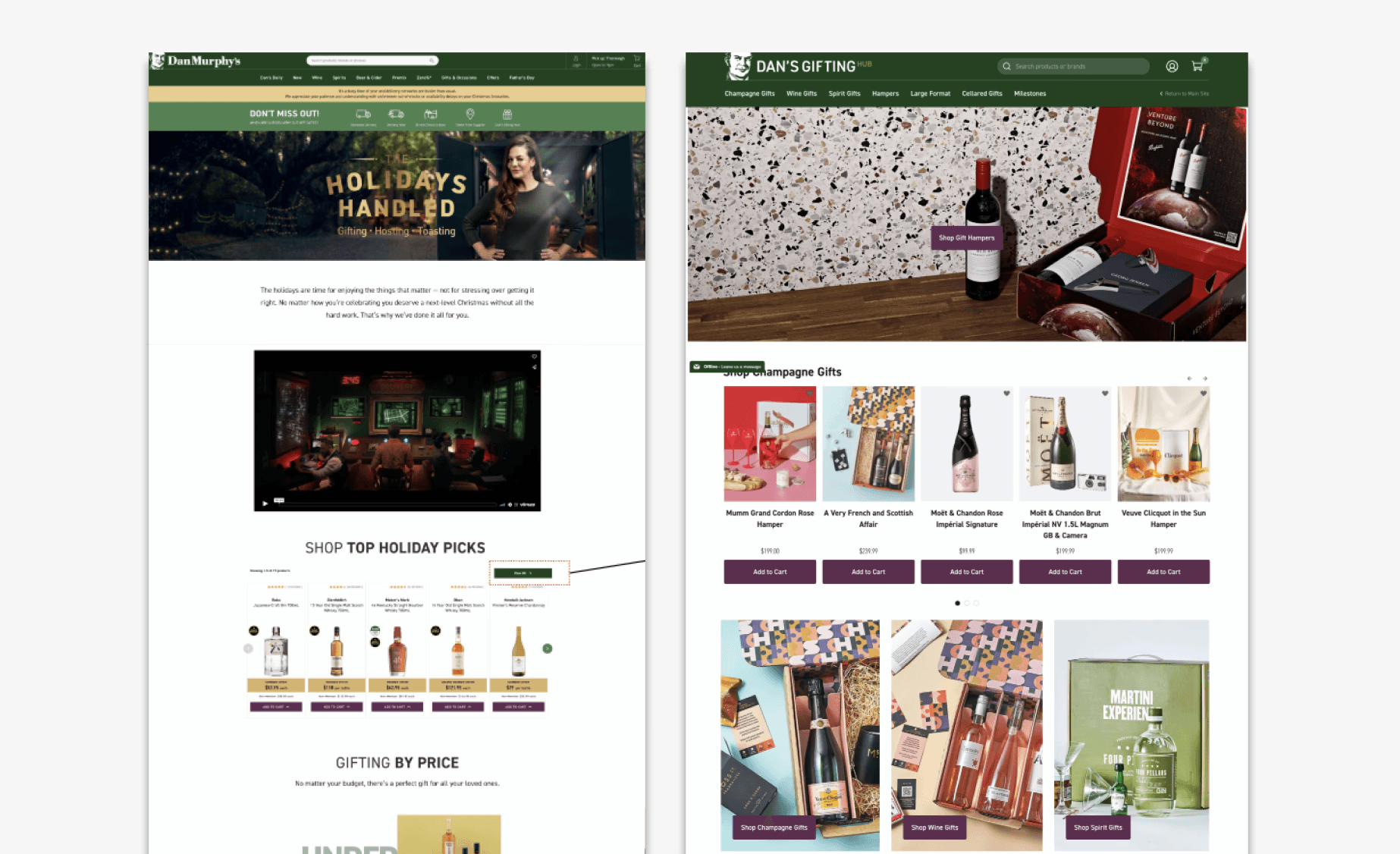
The Process
Problem Statement
Dan Murphy’s previous Christmas campaign pages were overly content-heavy, lacking a user-first approach and clear visual hierarchy.
The experience was difficult to navigate, leading to lower engagement and missed opportunities to connect customers with relevant seasonal offers.
Key product groupings were under-utilised and the mobile experience where most users engaged was particularly underserved.
There was a critical need to shift towards a product-focused, mobile-optimised design that simplified navigation, elevated seasonal shopping missions, and ultimately improve conversion across all devices.
Discovery and Research
As the sole UX Designer embedded in a squad who had limited prior exposure to design processes, I mapped out a clear, structured approach to guide and ensure the success of our Christmas campaign designs.
I started with an analysis of the current state and the performance of the pages previously:
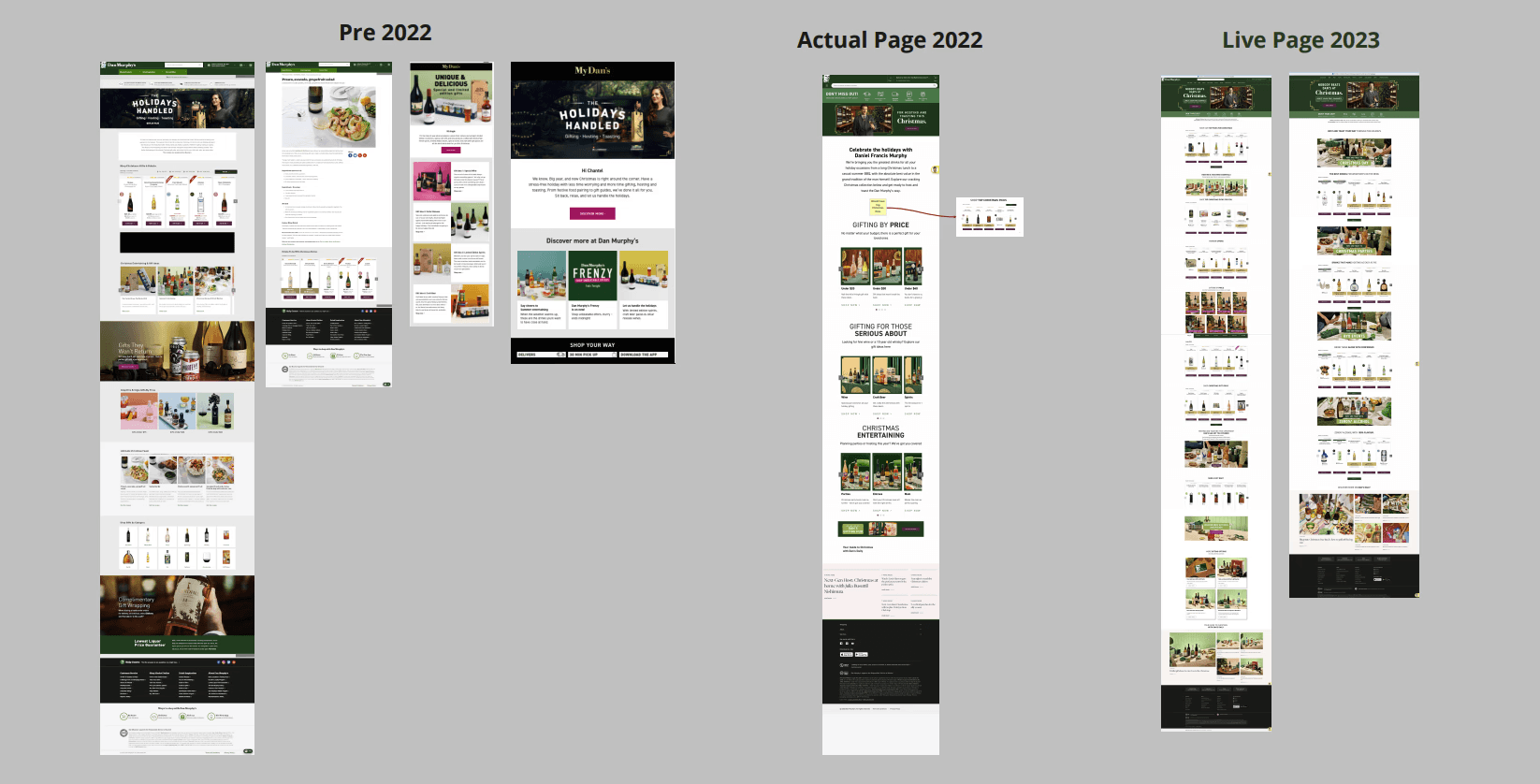
Review of Previous Year's Christmas Landing Pages
I reviewed the previous years of Christmas and found that the campaign’s central hub was falling short with confusing layouts and inconsistent visuals which buried key deals, leading to missed conversion opportunities.
Disjointed category treatments and poor content hierarchy caused unnecessary scroll and made it harder for customers to find high-impact product sections and resonating with sections that really made Christmas special such as gifting.
Data Analysis and Conversion Rate Optimisation (CRO)
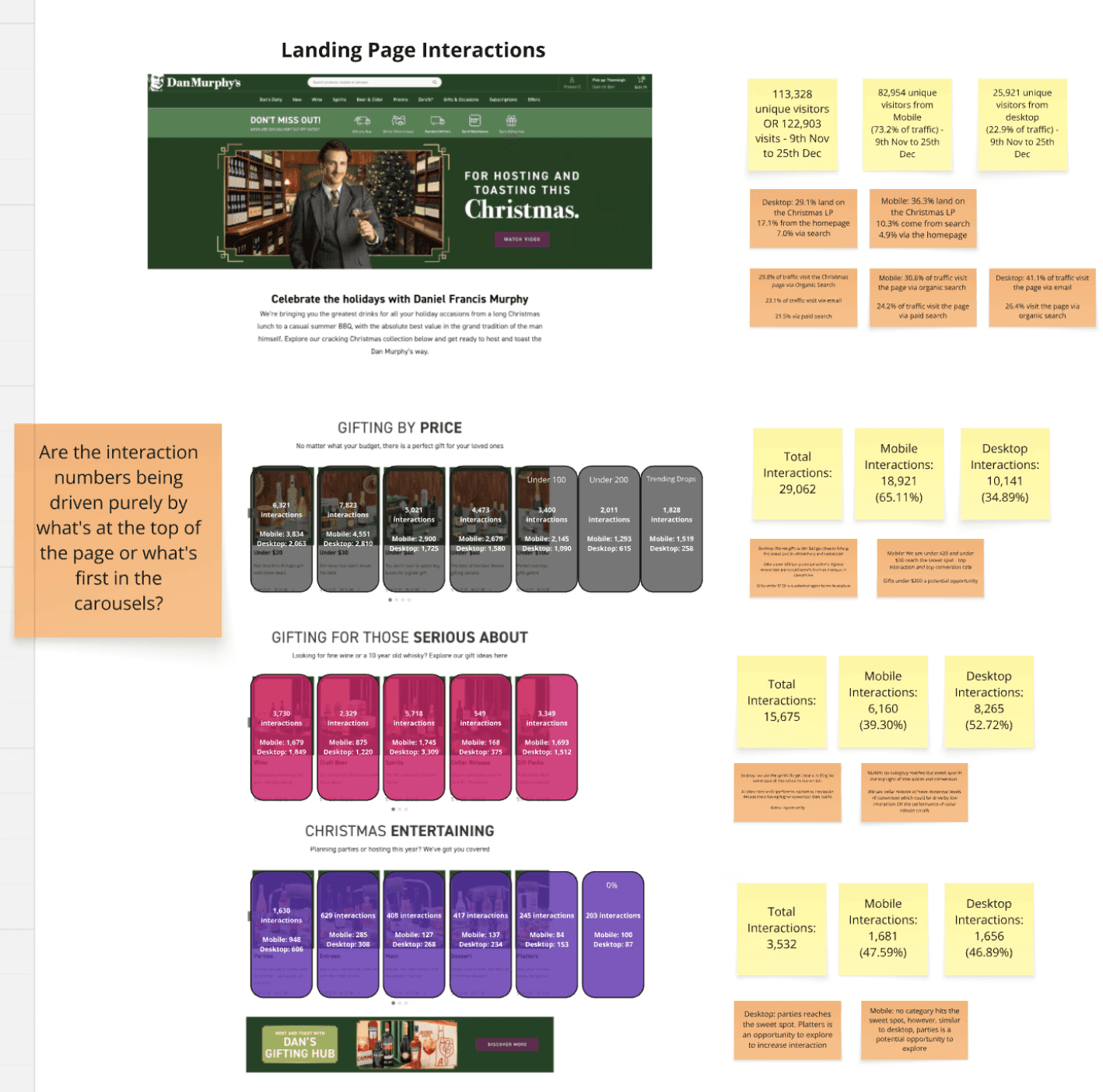
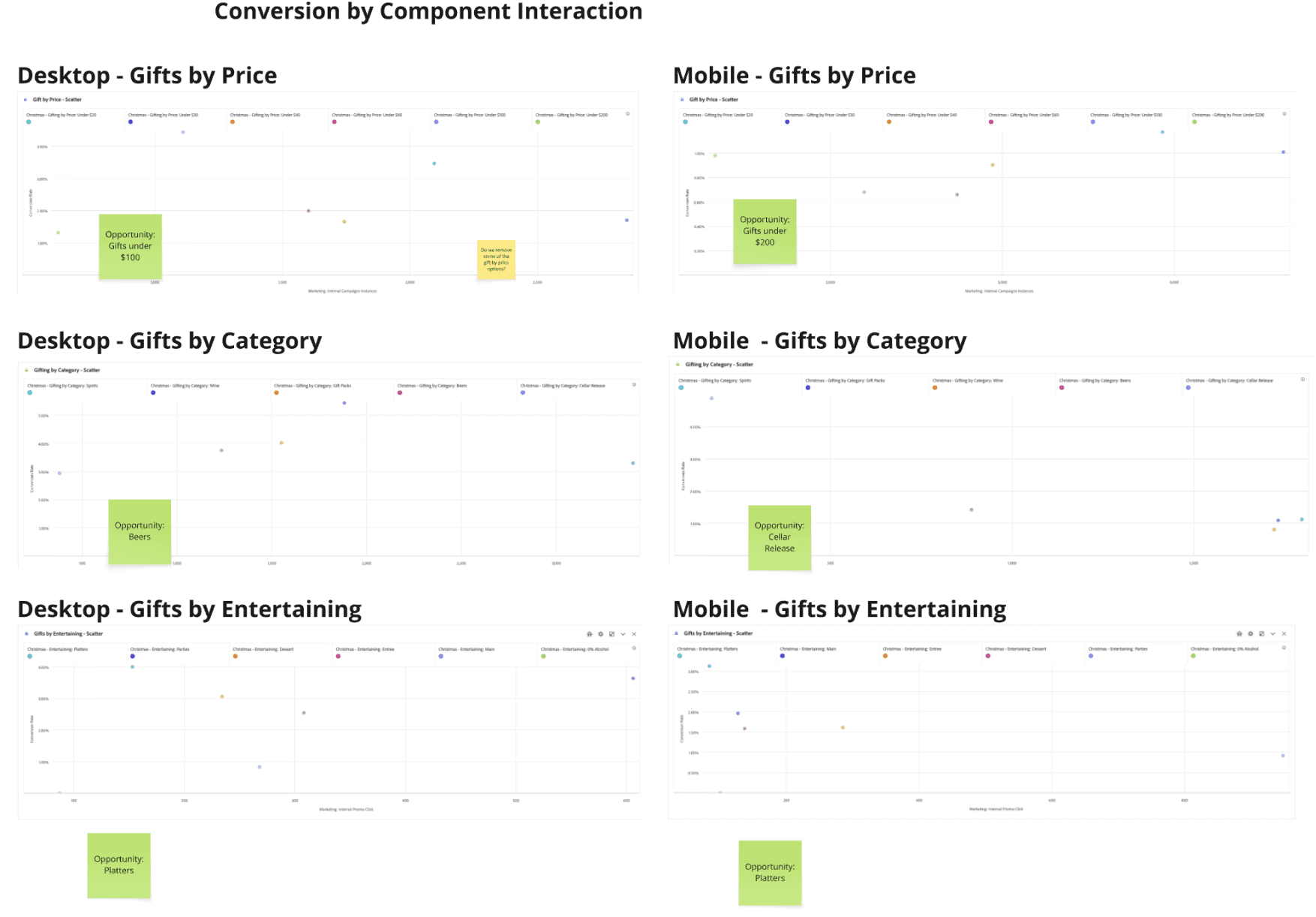
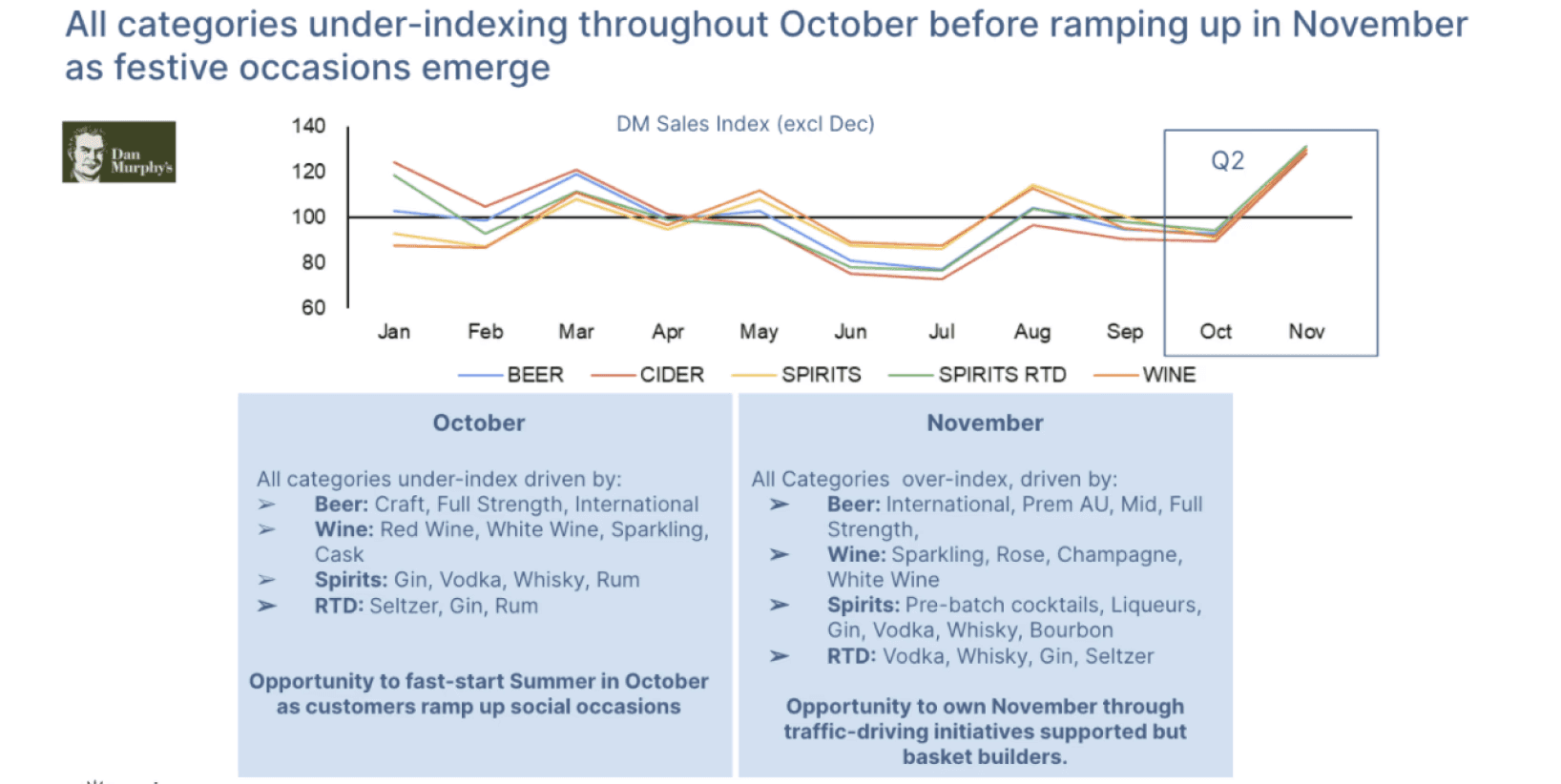
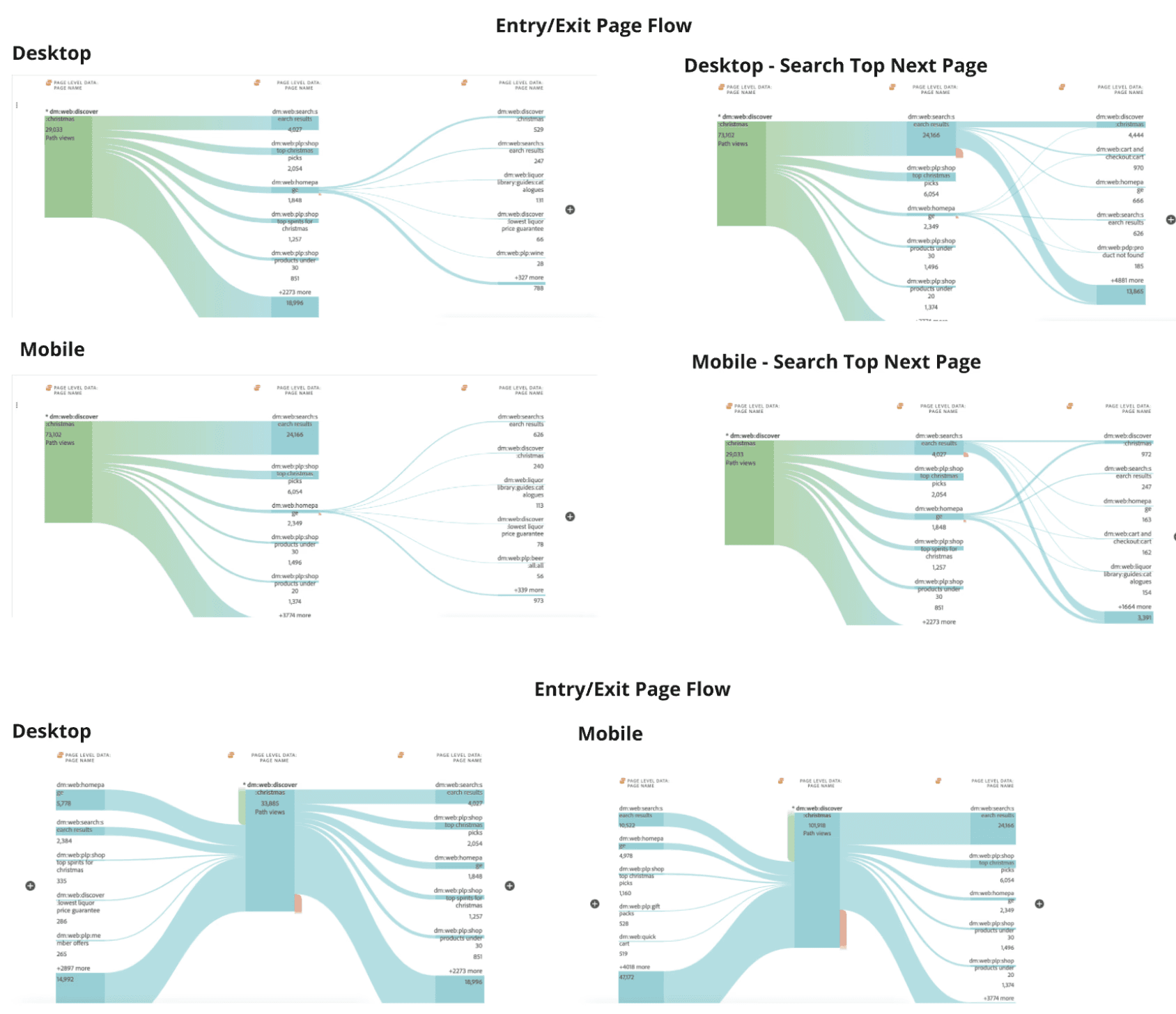
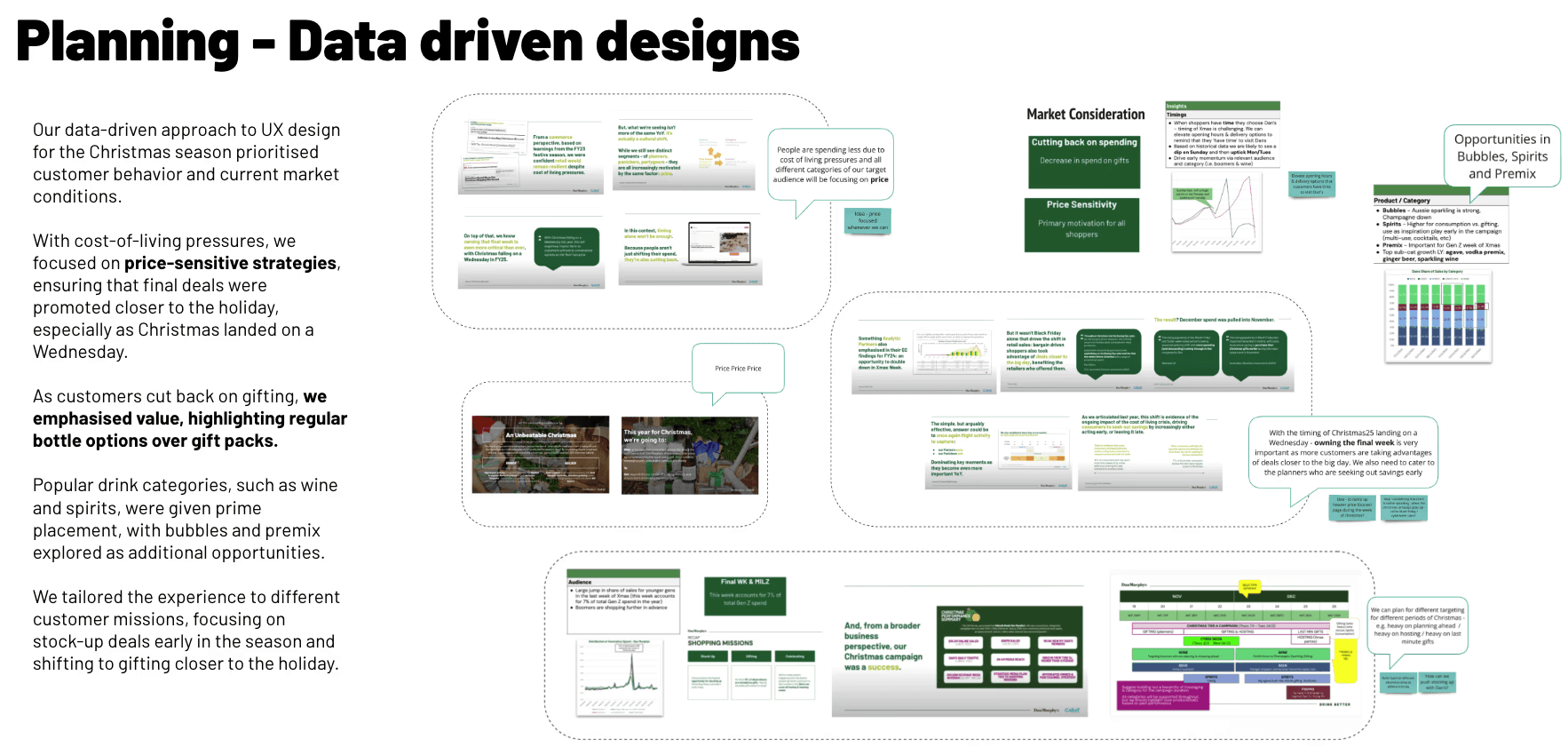
Working closely with the CRO team, I used key data points and past PCA (Post Campaign Analysis) insights to identify what experience should be prioritised on the page.
Top Insights:
Mobile accounted for 73.2% of traffic compared to desktop which were 22.9%
Highest interacted components were price components particularly under $30 indicating customers want for gifting value and competitive pricing
We needed to take ownership of the final days leading into the event when traffic and orders peak to maximise conversion and customer impact
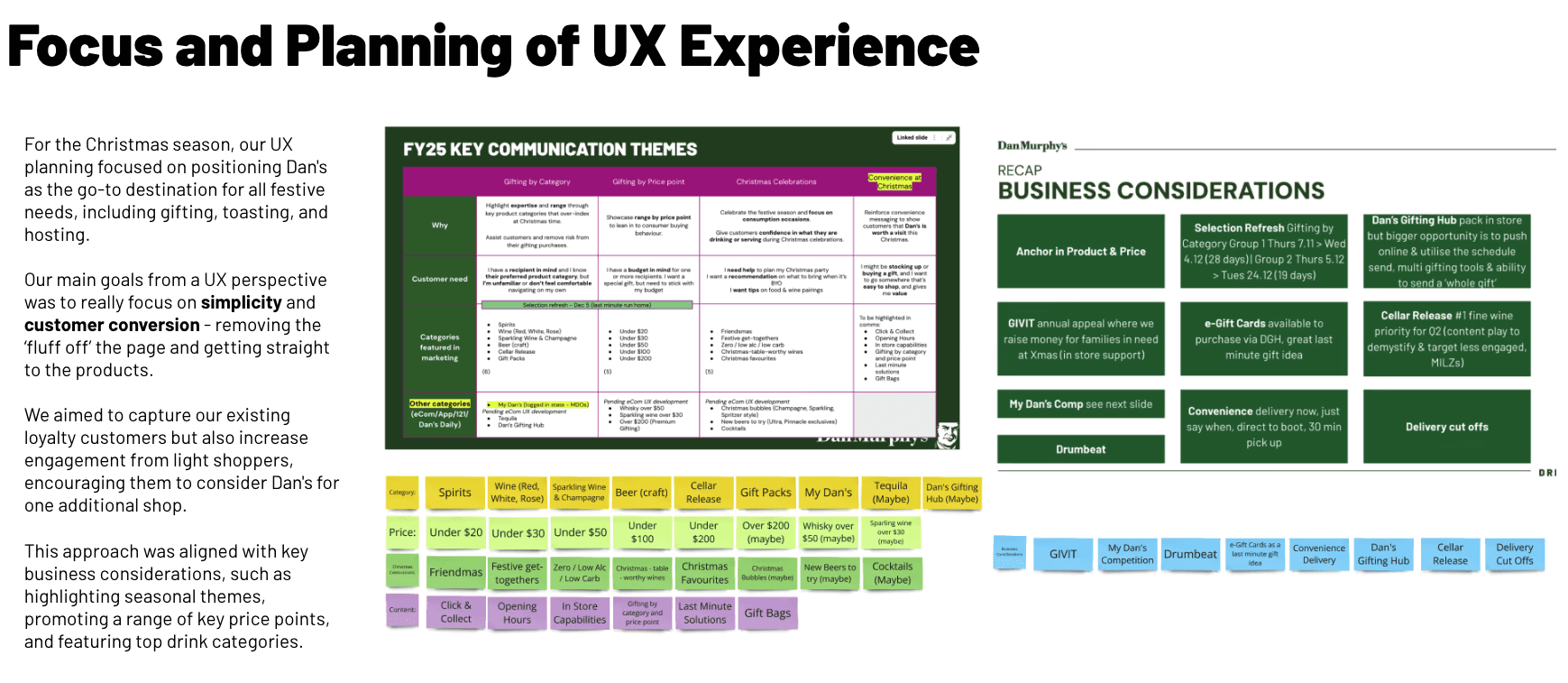
Analysis of the objectives of the campaign and business considerations
I analysed the campaign’s strategic objectives alongside core customer personas to inform UX direction for the Christmas period.
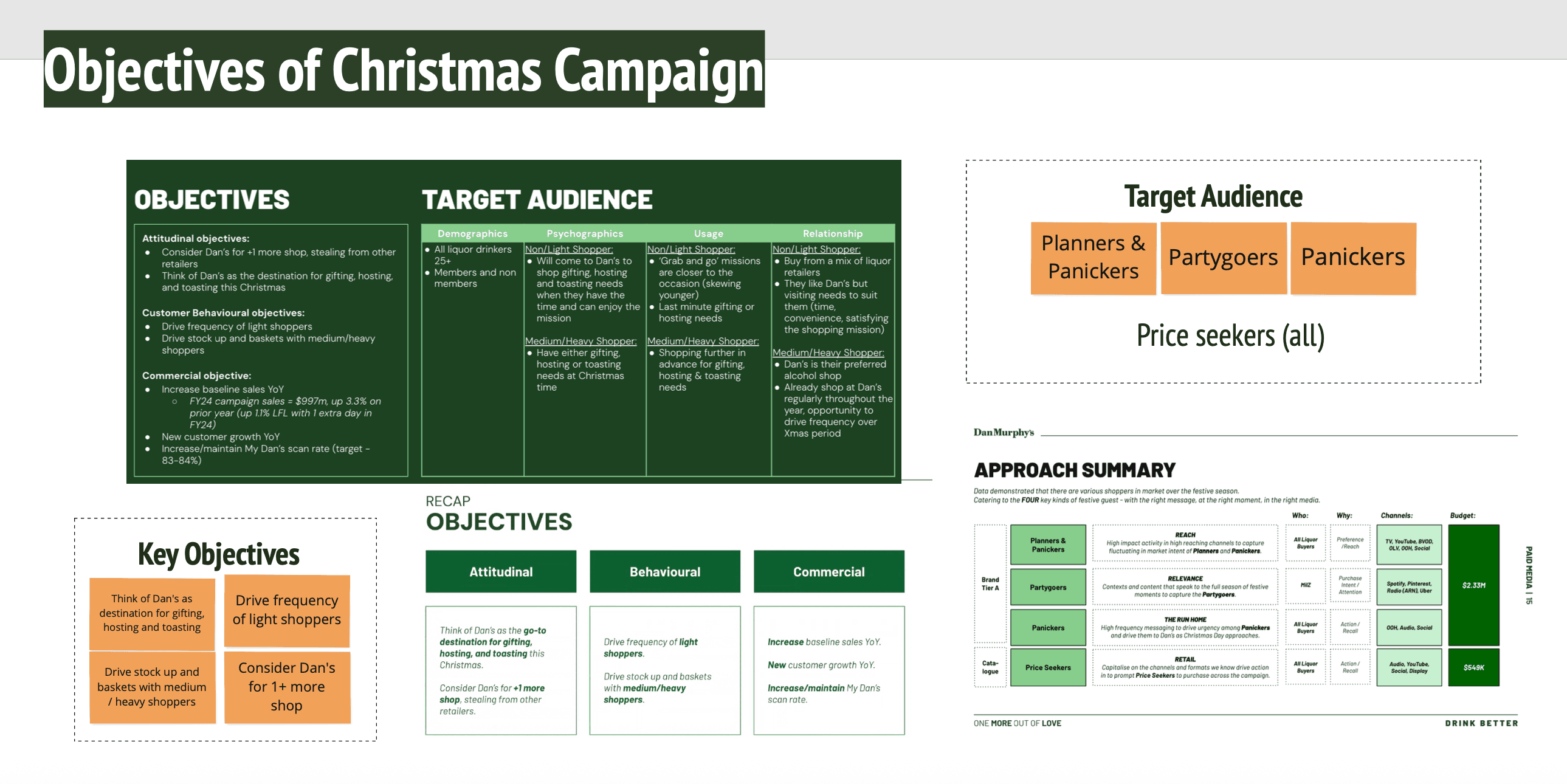
Key audiences included:
Planners & Panickers – high-intent shoppers engaging at different stages of the season
Partygoers – seeking drinks for festive hosting and celebration moments
Price Seekers – value-driven customers hunting for deals across categories
Our key objectives were to:
Position Dan’s as the go-to destination for gifting, hosting, and toasting
Drive frequency among light shoppers
Encourage an additional shop from current customers
Grow basket size by supporting stock-up missions with medium/heavy shoppers
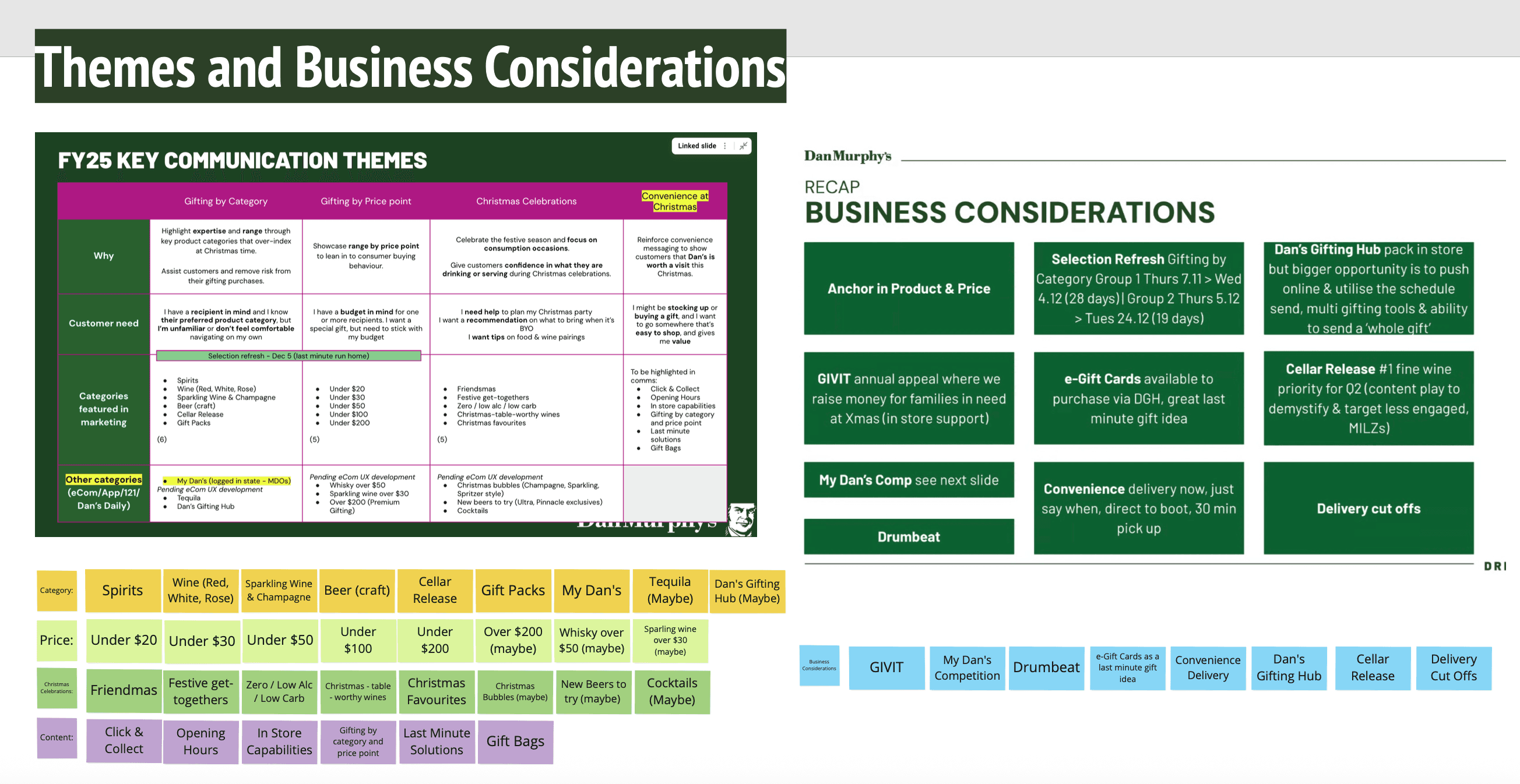
The UX direction was also shaped by key FY25 communication themes and marketing priorities.
Marketing dictated a focus on four core themes:
Gifting by Category – helping customers confidently navigate product categories
Gifting by Price Point – supporting value-driven shopping behaviours
Christmas Celebrations – enabling festive moments with pairing tips and drink confidence
Convenience at Christmas – reinforcing Dan’s as a one-stop shop for last-minute and stock-up missions
The challenge was to incorporate all the themes while ensuring the Christmas page still hit goals of conversion and convenience without overwhelming the user.
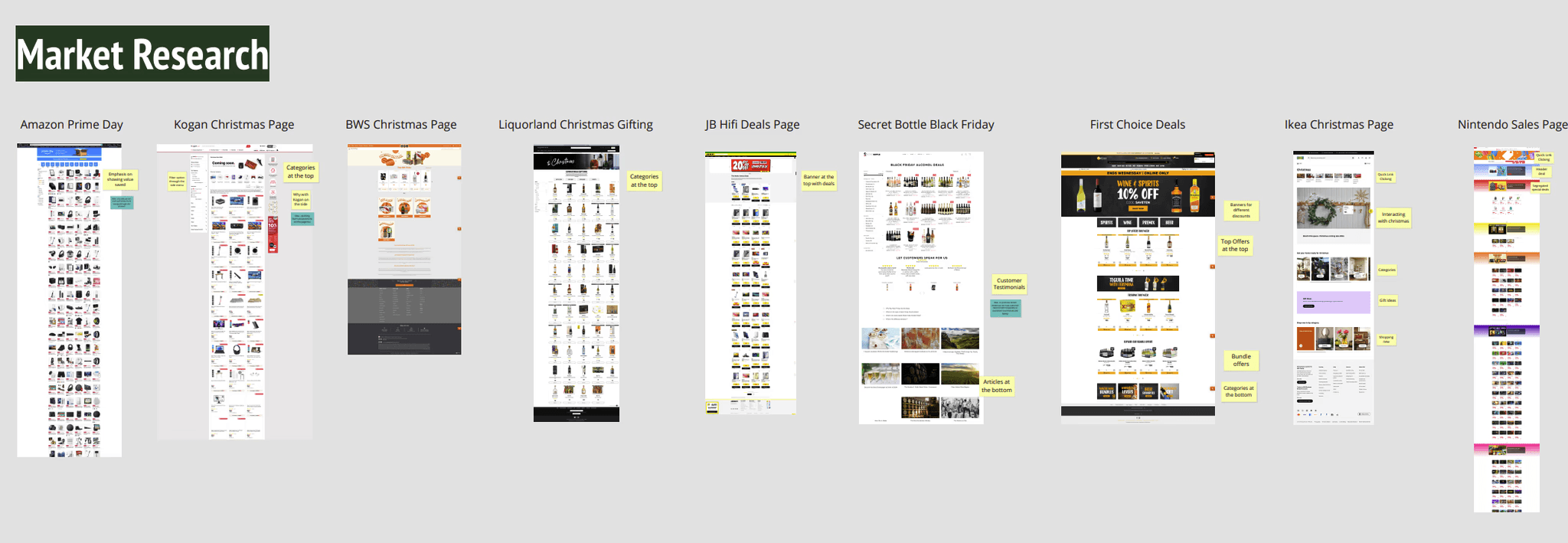
Market and Competitor Research
As part of the discovery stage I also looked at competitor pages. Each year, it is crucial to stay across evolving eCommerce trends and observe how other leading retailers approach their Christmas campaigns.
This includes reviewing not only general best-practice across retail but also analysing what direct alcohol industry competitors, such as Liquorland and First Choice, are doing to engage their audiences during the season.
Define
I also summarised the findings into key themes to guide design decisions for Christmas.
Key Themes Analysis
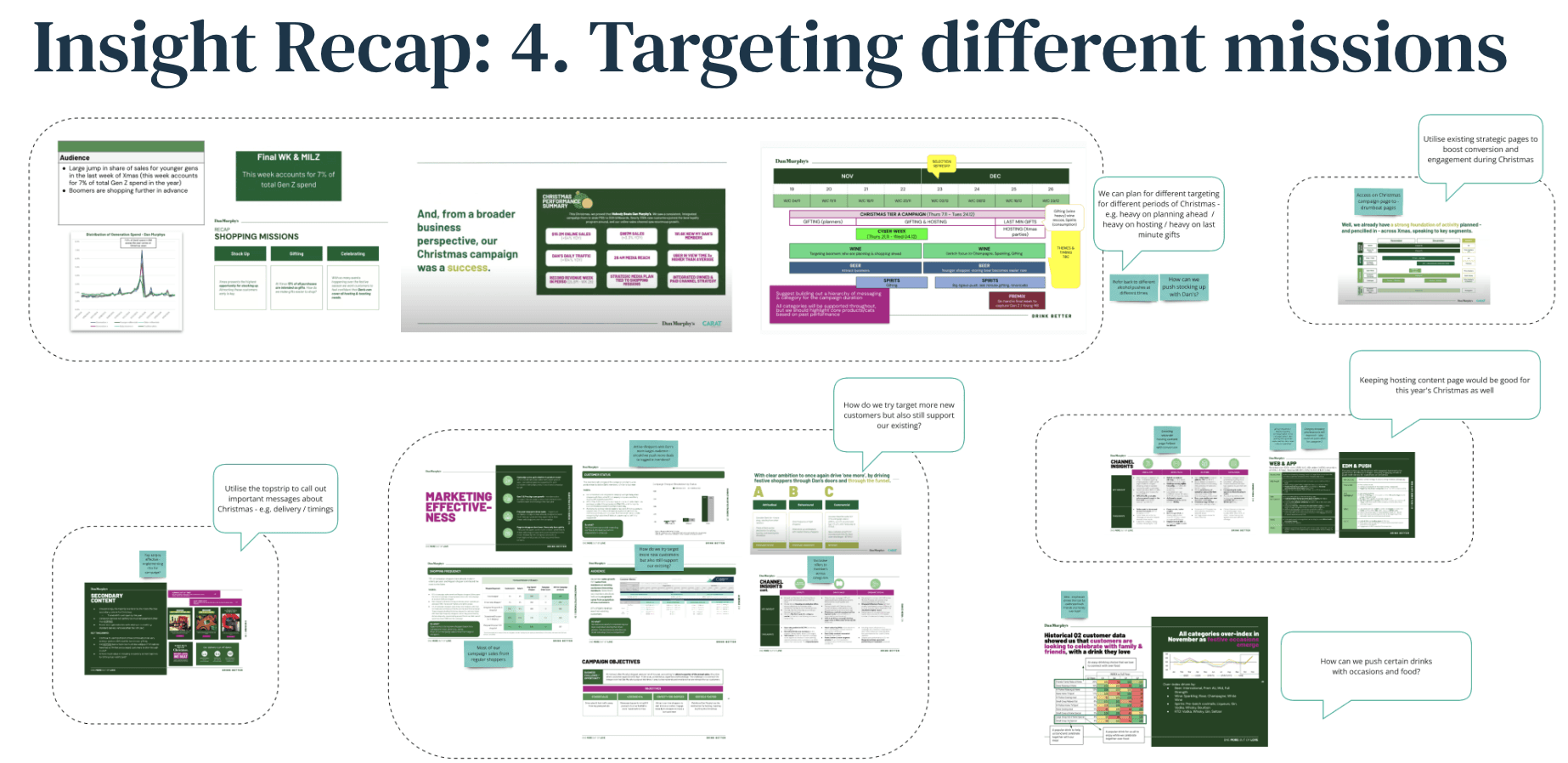
Based on data insights, I identified four key themes that shaped our UX approach for the Christmas campaign:
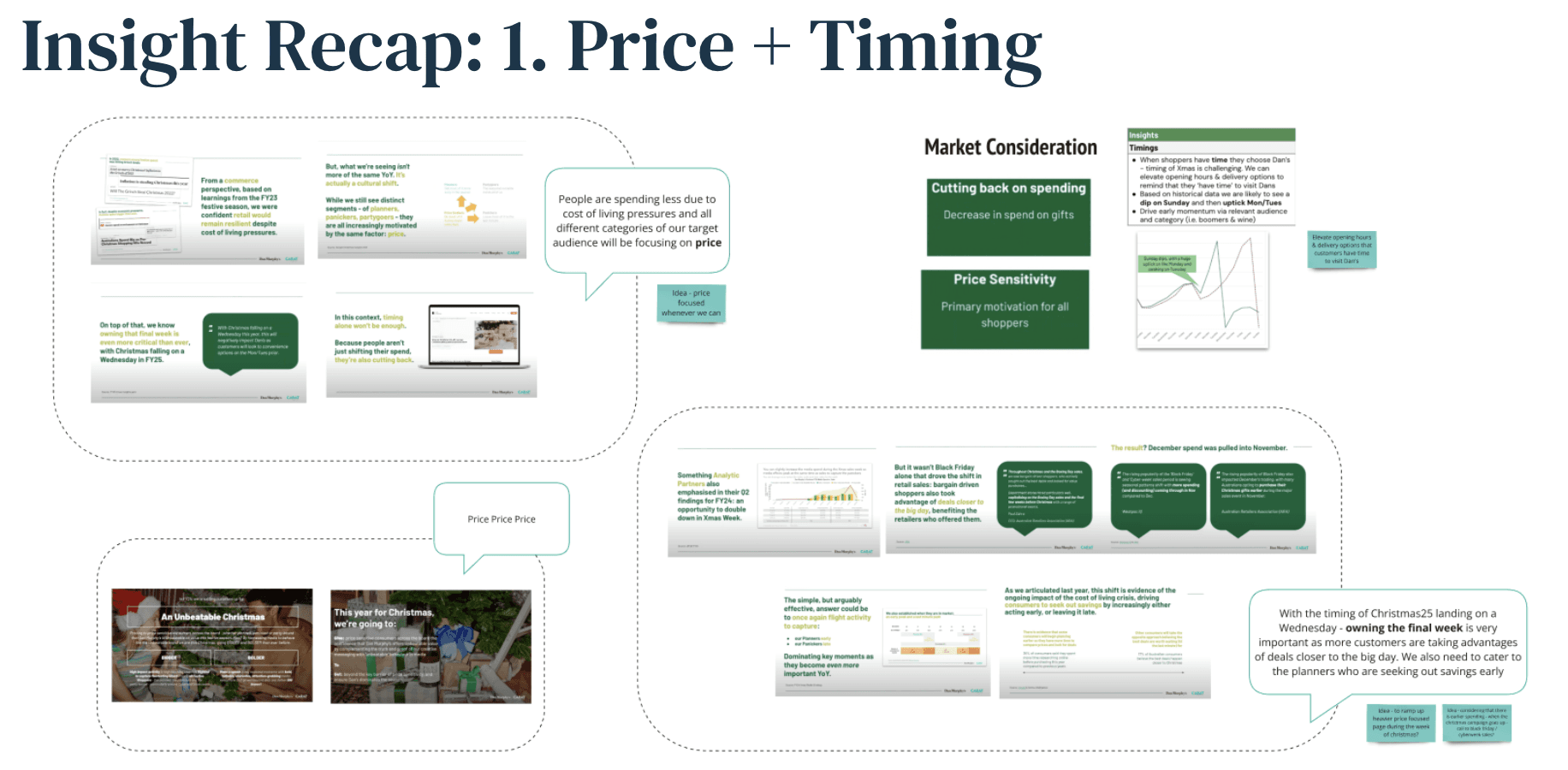
Price Sensitivity & Timing
With economic pressures and Christmas falling on a Wednesday, value messaging and ownership of the final week were critical to conversion.
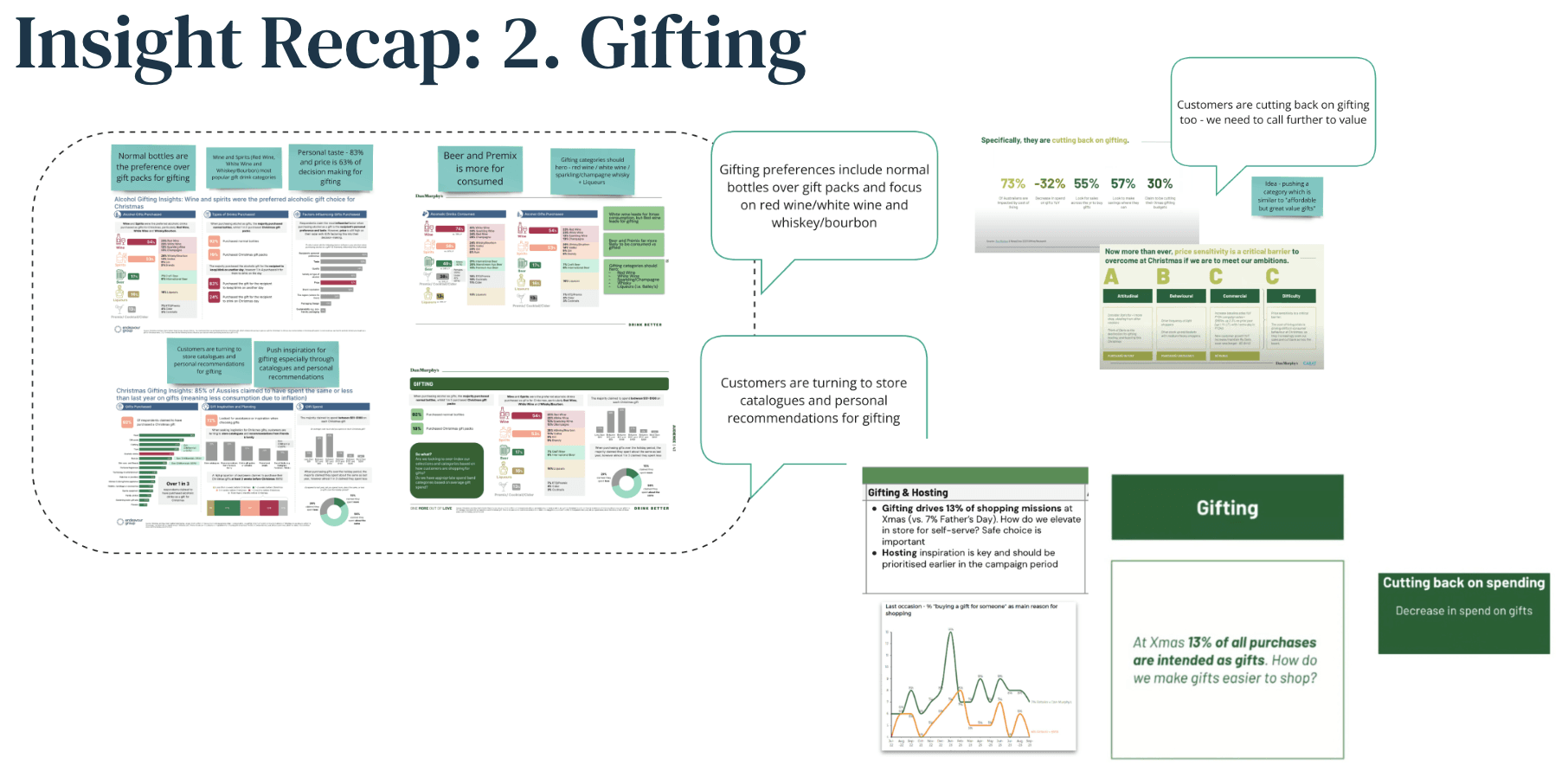
Shift in Gifting Behaviour
Customers were spending less on gifts, so we focused on reinforcing value, supporting self-serve options, and simplifying product discovery.
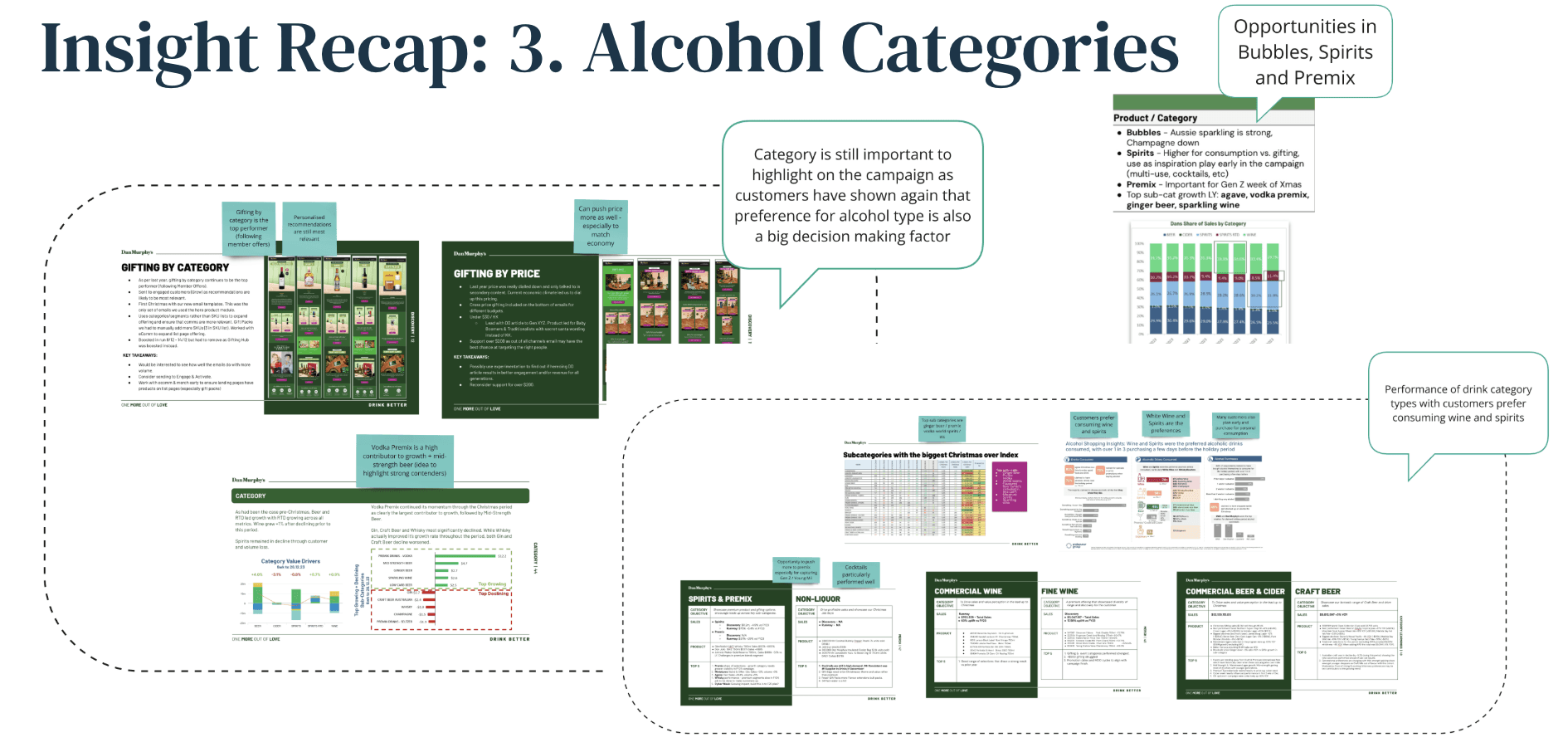
Category-Driven Shopping
Alcohol categories remained a key driver of decision-making, with growth opportunities in spirits, bubbles, and premix.
Mission-Based Journey Support
I aligned content to different customer missions, e.g. prioritising stock-up and value early in the season, then shifting focus to gifting and hosting in the final lead-up to Christmas.
Stakeholder Alignment and Ideas of Success
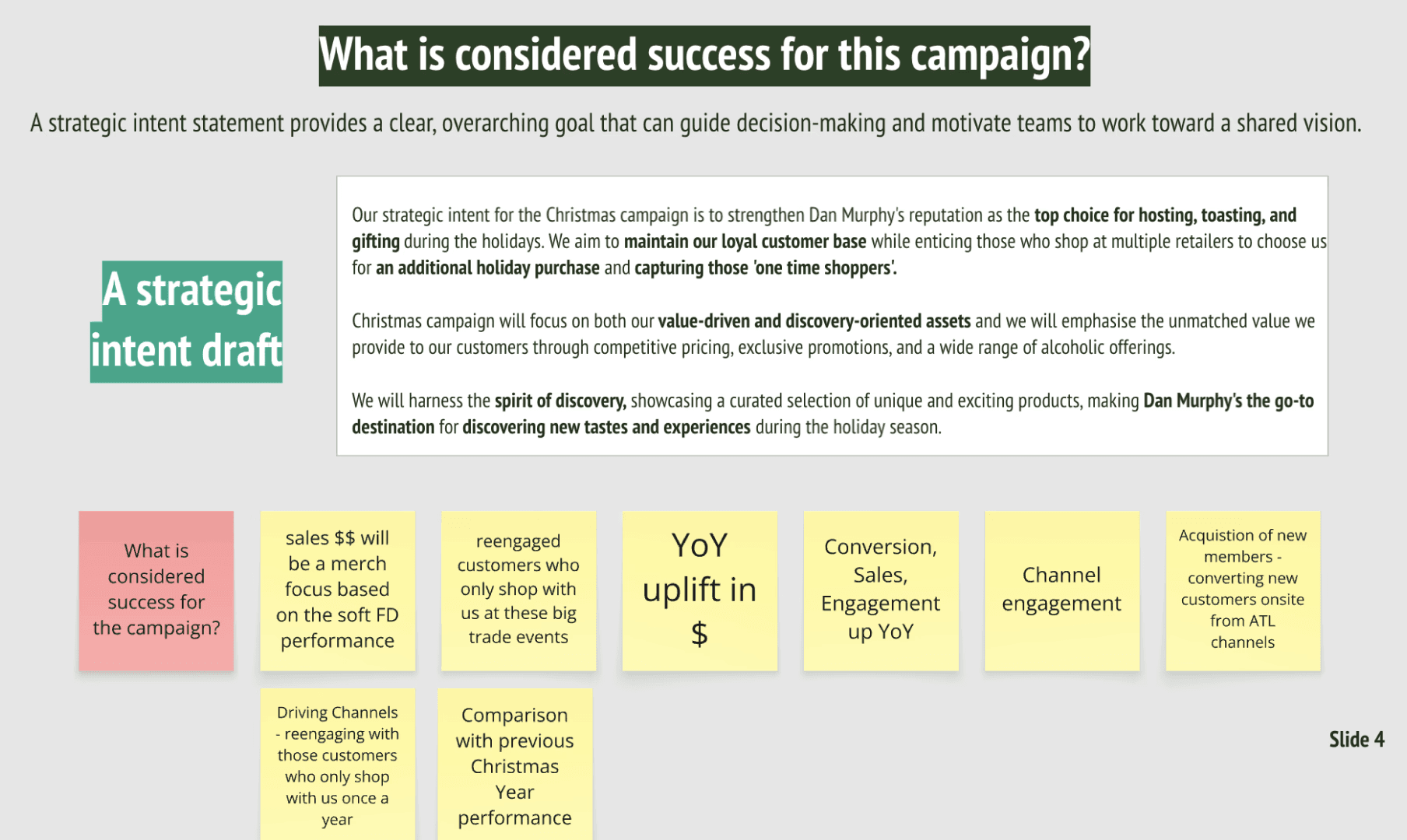
I facilitated an early kickoff session with key stakeholders including the PM, eCommerce Manager, Marketing, and Developers, to review data insights and campaign objectives.
I created the strategic intent for the Christmas Campaign and we aligned on shared definitions of success and what the UX needed to deliver to support both customer needs and business goals.
Ideate
Design Jams and Stakeholder Workshops
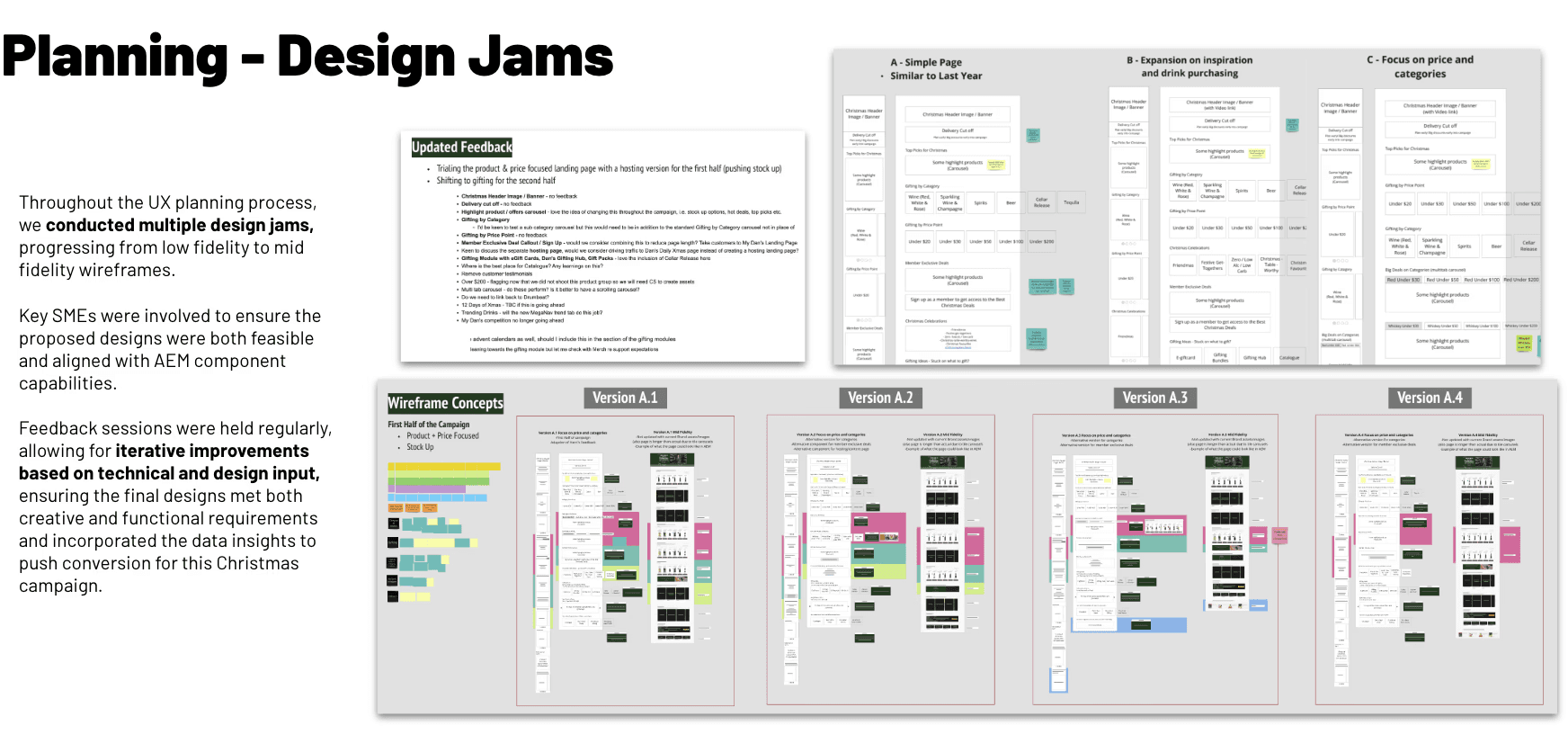
I facilitated a series of design jams and stakeholder workshops to explore how we could elevate the Christmas campaign experience.
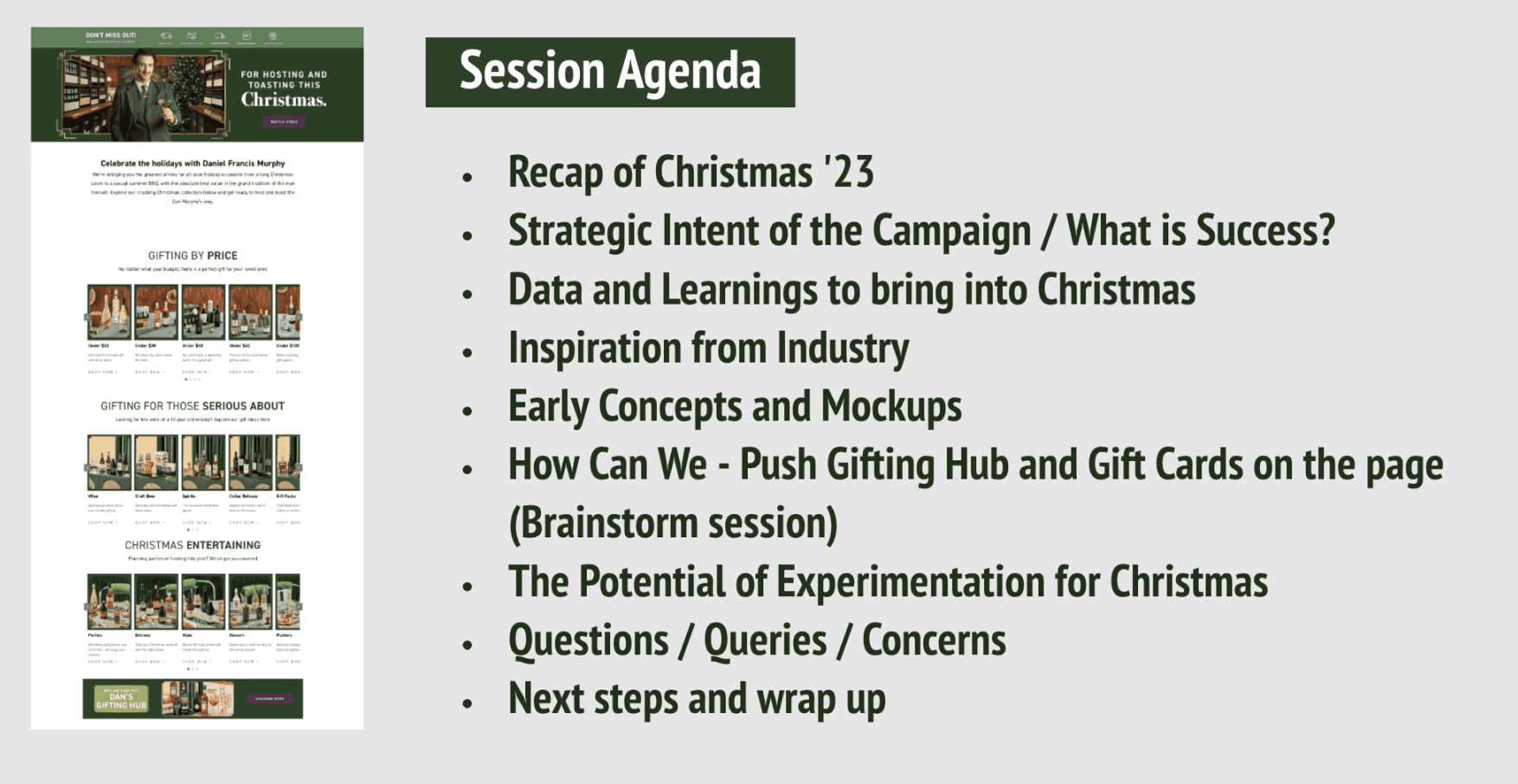
We brainstormed feasible enhancements as well as blue-sky opportunities, balancing innovation with delivery constraints.
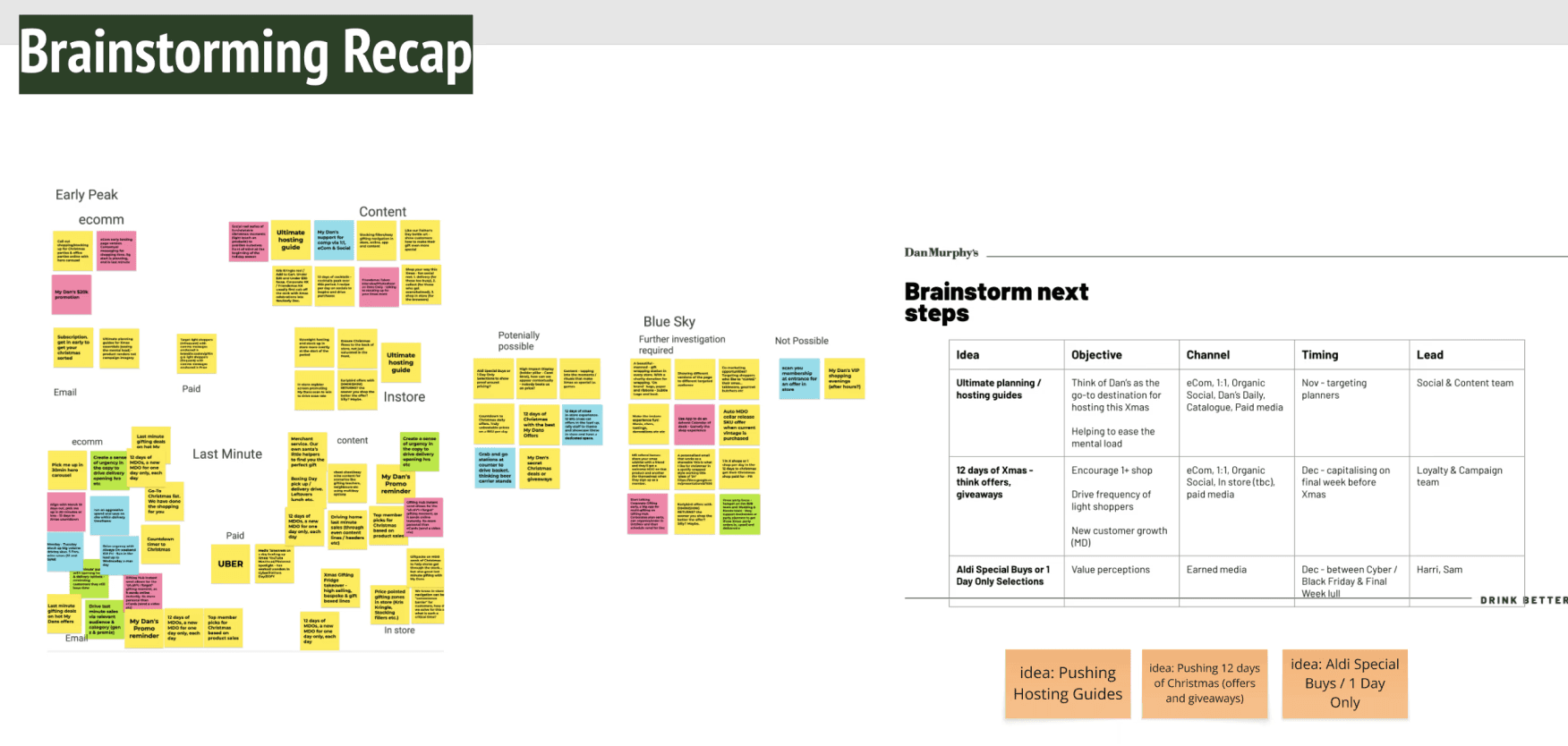
Each session was structured around key moments, from recapping past performance to identifying opportunities for change. I brought in the data insights and industry inspiration to spark discussion, encourage creative thinking, and guide the team toward more impactful, customer-led solutions.
We explored ways to amplify under leveraged features like gift cards and the Gifting Hub, shaping ideas that better served key missions while aligning with business priorities.
Design
Using insights gathered from data analysis, stakeholder feedback, and collaborative brainstorming, I moved into the first stage of wireframing in low fidelity.
Initial Wireframing
In the low fidelity wireframing stage, I focused on designing for mobile-first to reflect our users’ device preferences found in the discovery stage.
I developed two design directions to support the evolving customer missions across the campaign timeline:
Version A targeted the early phase of the campaign, focusing on product discovery, pricing, and stock-up needs for planners seeking value and preparedness.
Version B was tailored for the final stretch, supporting last-minute shoppers and gifters - the panickers - by prioritising ease, urgency, and clear pathways to gifting solutions.
These versions aligned with behavioural insights and enabled a responsive experience that evolved with customer intent throughout the season.
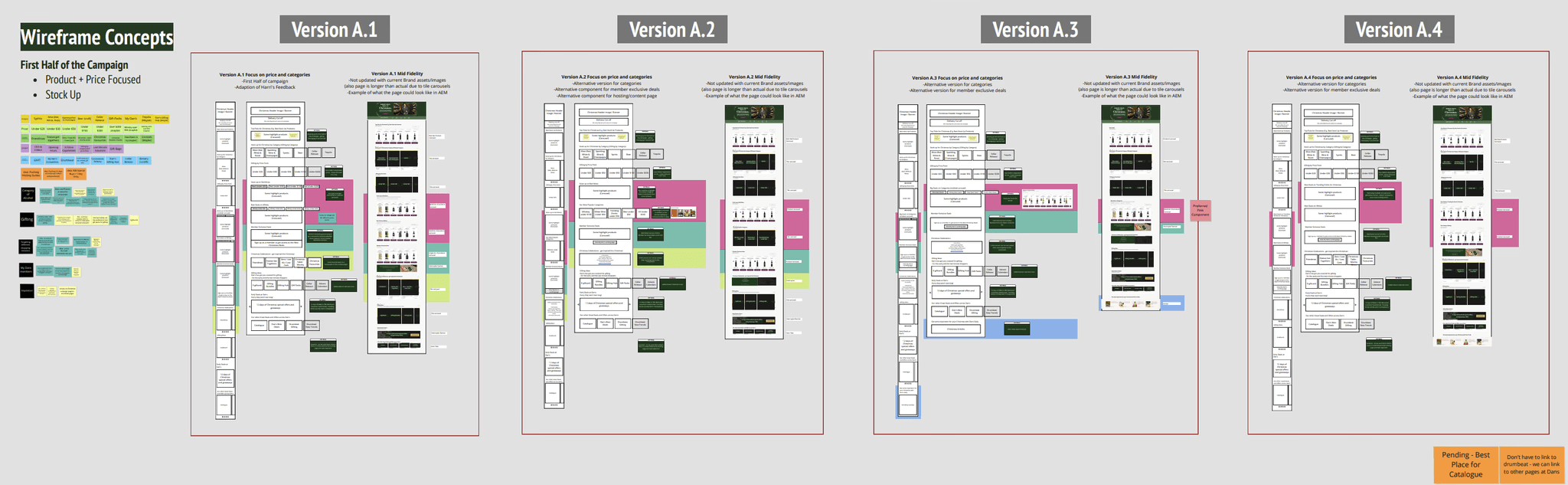
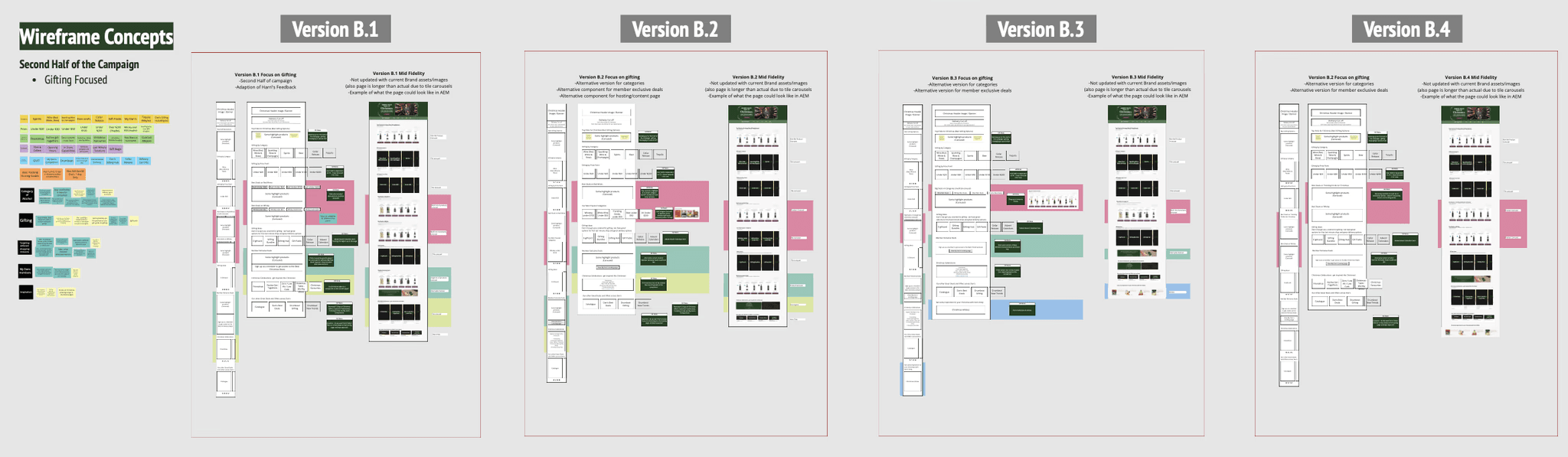
To aid clarity during stakeholder reviews, I used colour-coded highlights to distinguish key themes, such as price-driven categories, hosting content, member-exclusive deals, and editorial articles, making it easier to evaluate and prioritise content placement on the page.
Iterative Wireframe Development
I ran ongoing workshops to present rounds of wireframes, ensuring stakeholder feedback was continually incorporated.
These sessions also allowed for updates based on evolving Christmas priorities such as shifting promotional activity or changes in deal structures.
Stakeholders were invited to vote and provide feedback on preferred wireframe directions, fostering alignment and clarity on next steps.
I continued to work closely with the CRO team and eComm squad PMs to ensure we remained in sync on design decisions and where further refinement was needed.
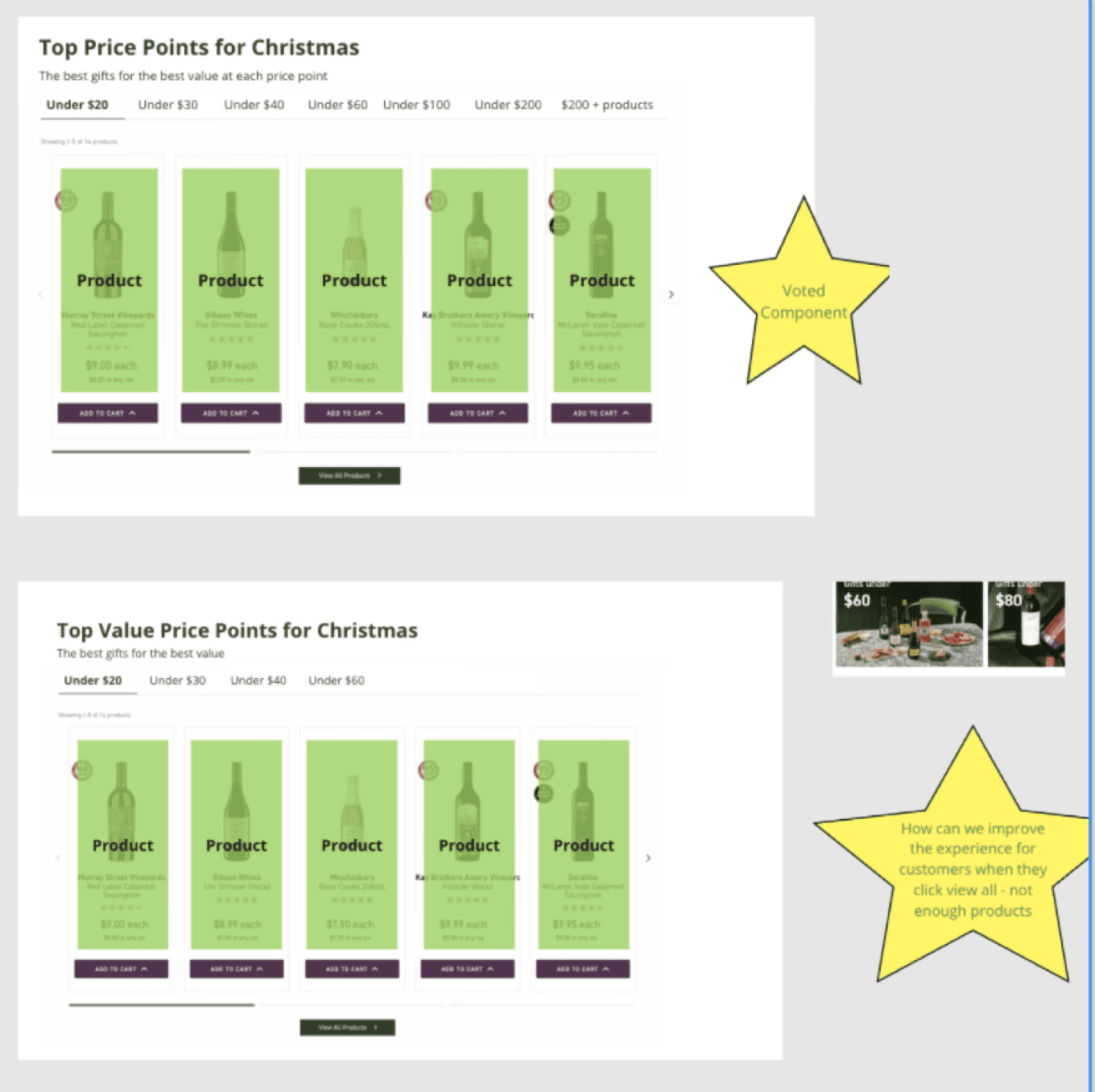
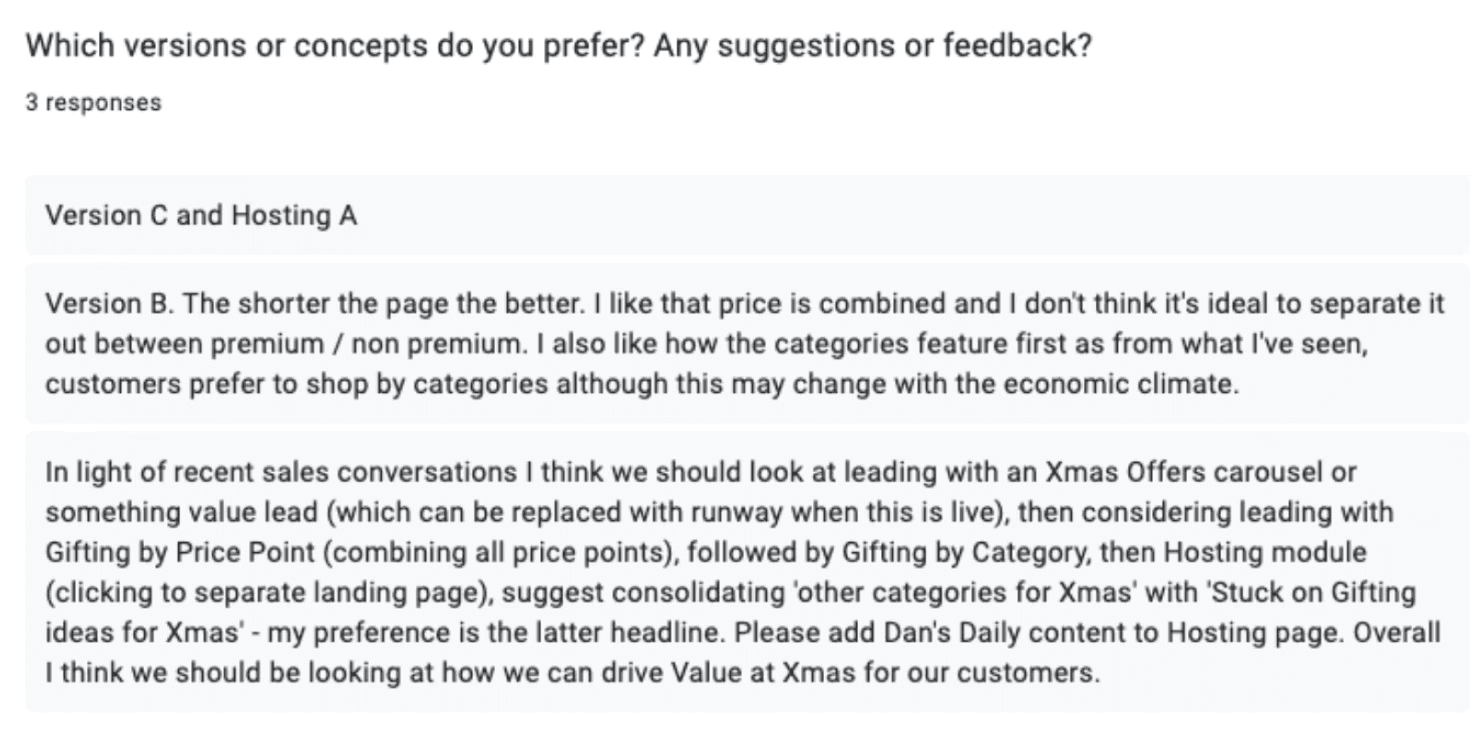
To support reflection and gather additional input, I also created a Google Forms survey following the workshops. This allowed stakeholders time to process the ideas shared and provide further feedback.
Further Data Analytics + A/B Testing
Following initial wireframing and co-design feedback sessions, I continued to collaborate closely with Marketing, Product and our CRO specialist and Data Analyst to further refine the design approach.
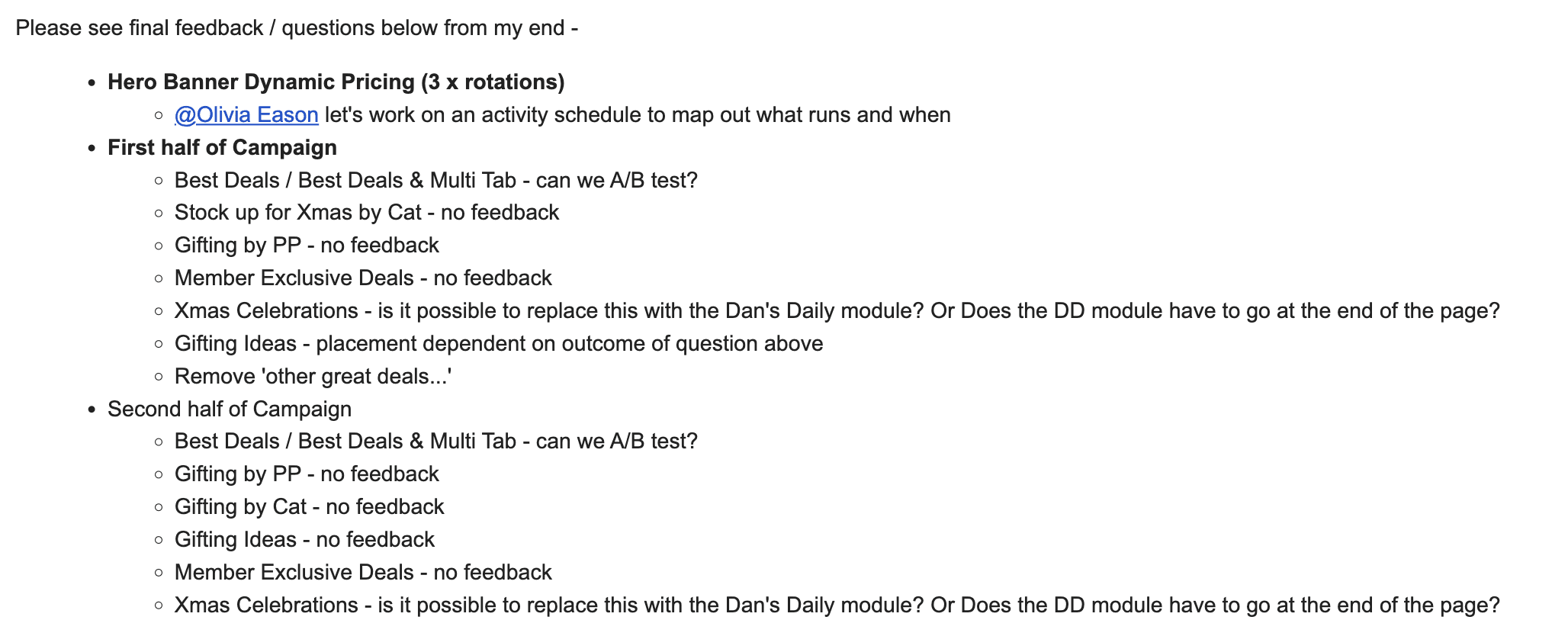
Marketing when providing feedback also flagged an opportunity to run an A/B test on the first product carousel — comparing a single "Best Deals" carousel versus a multi-tab version segmented by alcohol category.
Our Data Analysts also surfaced key insights showing that products under $20 accounted for nearly half of all wine sales and profit, reinforcing the importance of price-driven placement.
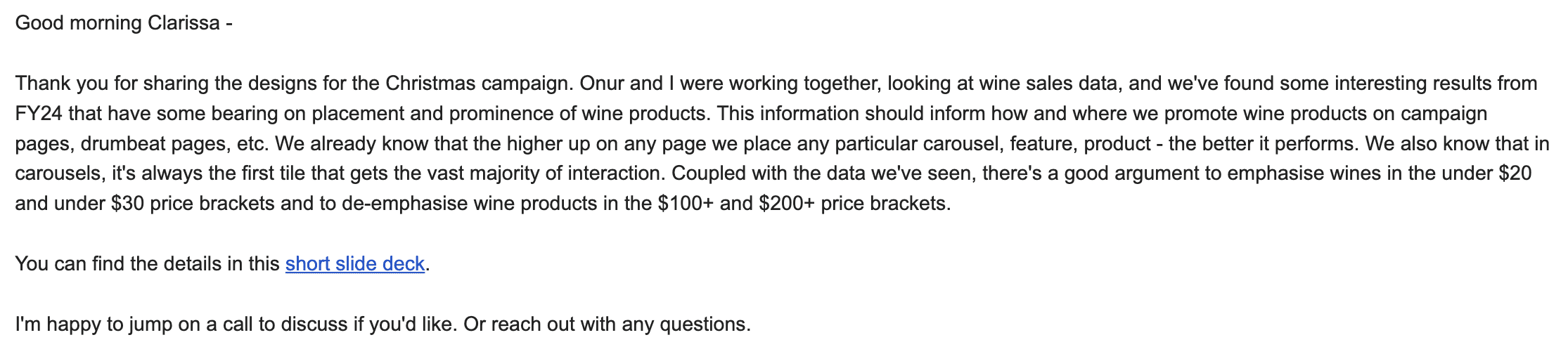
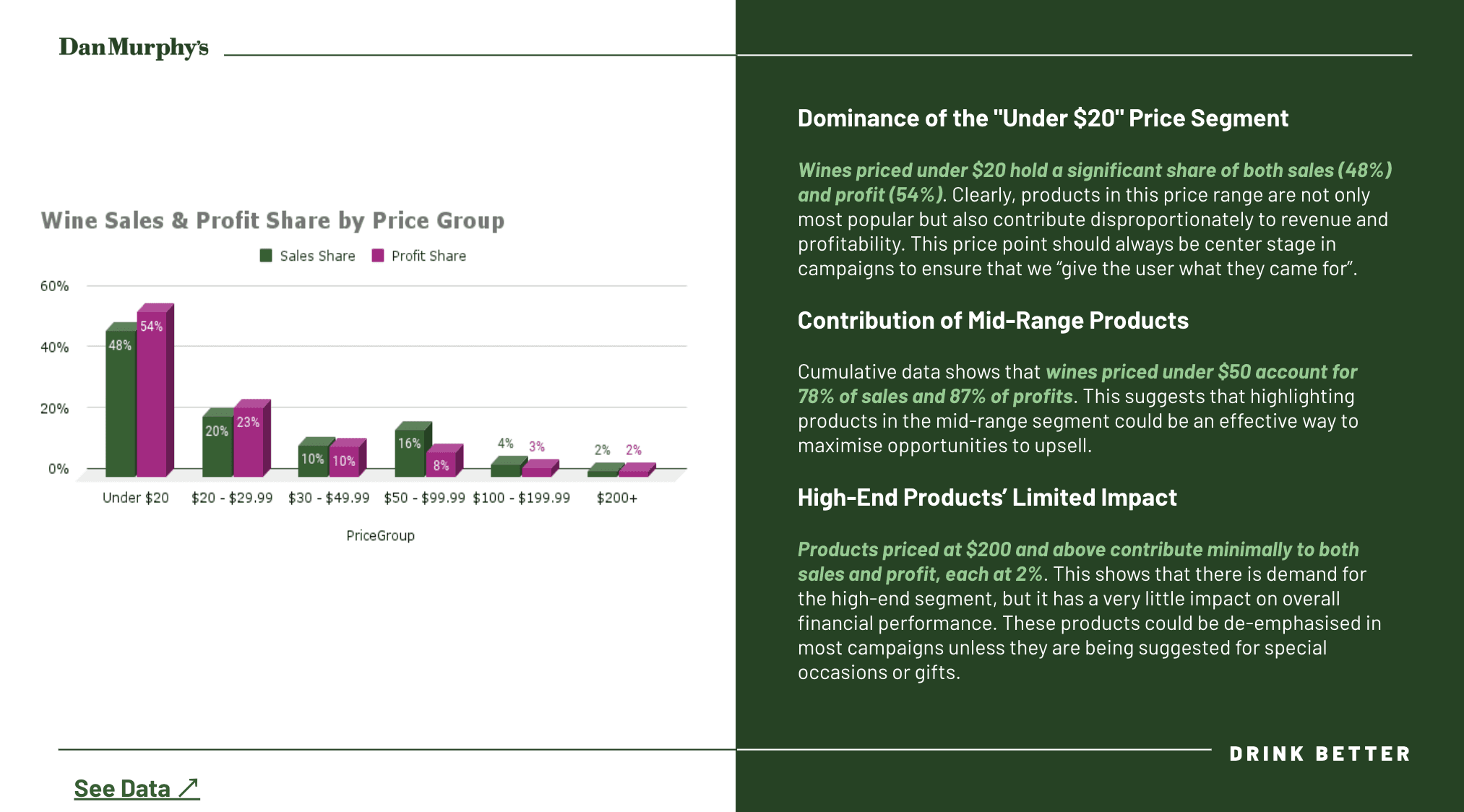
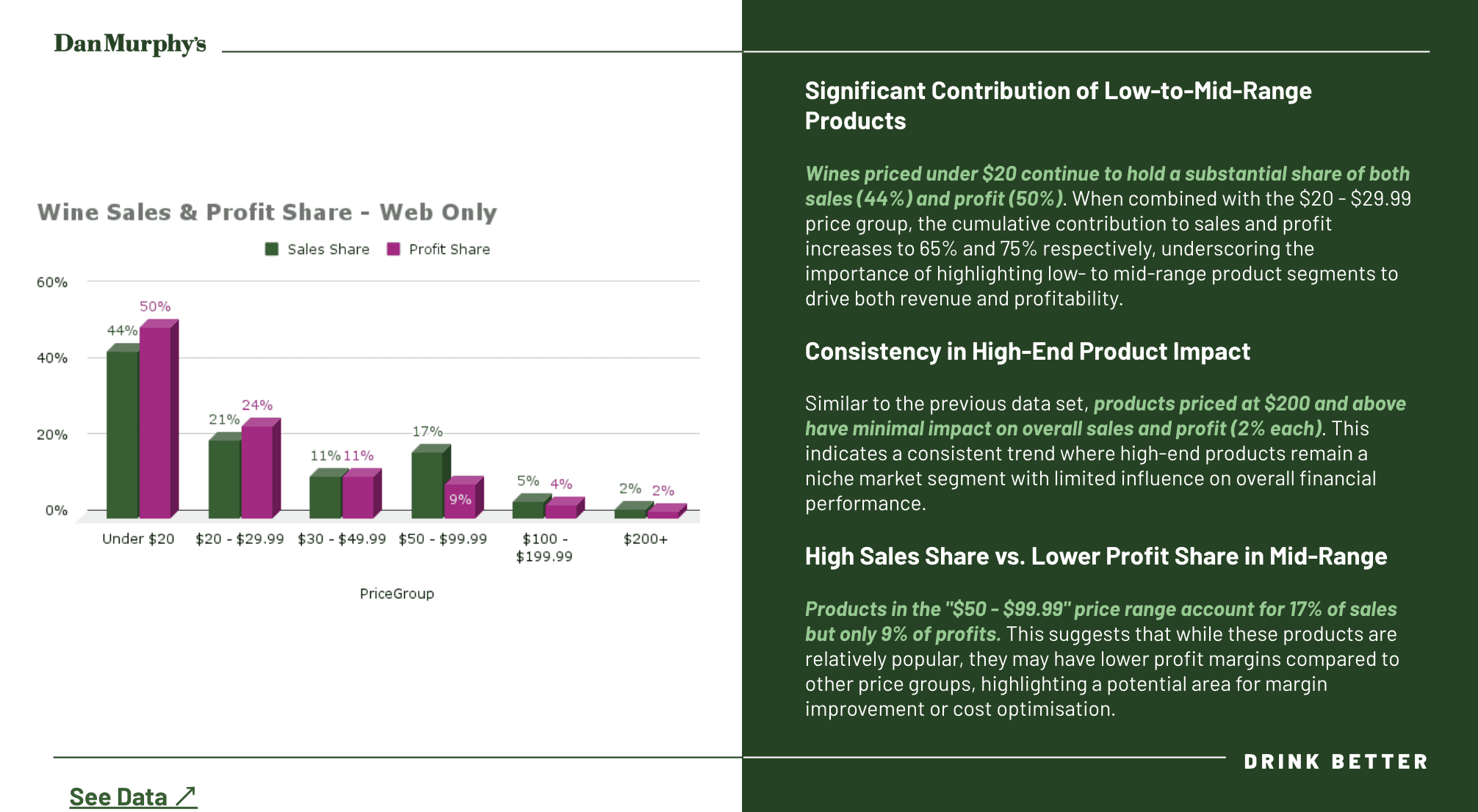
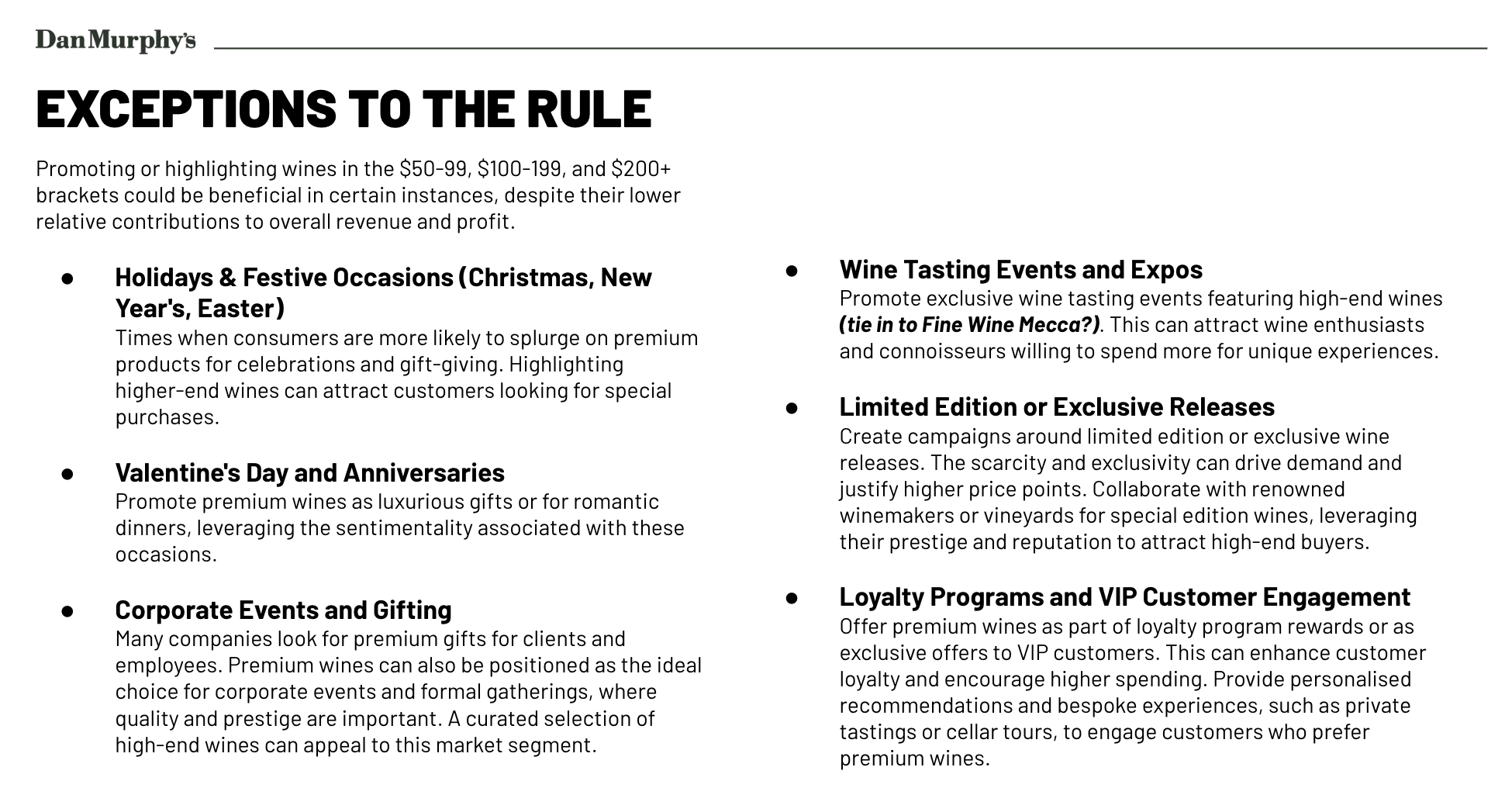
This led us to prioritise high-performing price segments and optimise page hierarchy to surface relevant products early in the experience.
Mid-Fidelity Design Creation
At the mid-fidelity stage, I translated all of the work and strategic direction thus far into clearer visual layouts, using existing AEM components (shown below) to maintain consistency and streamline development.
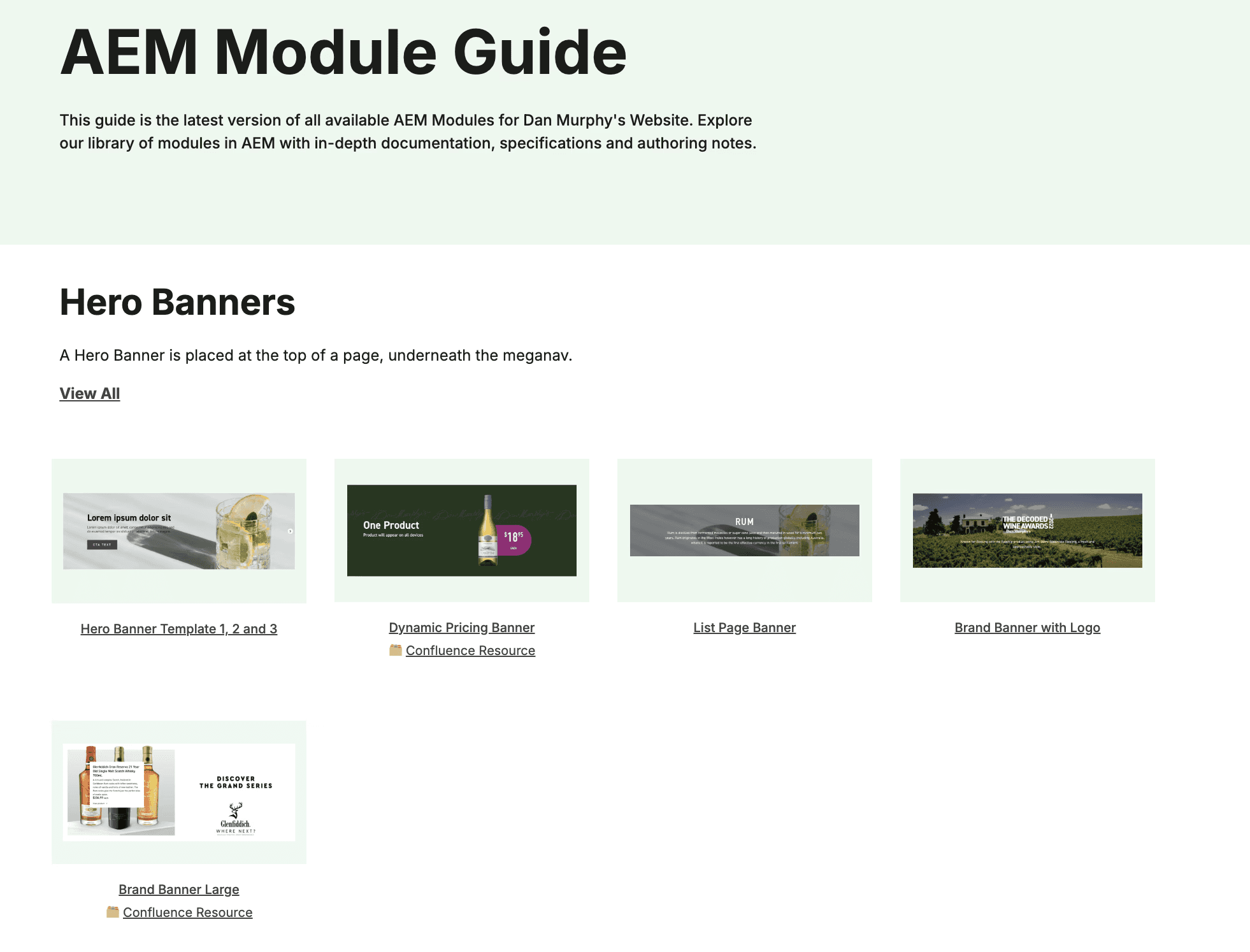
I refined the page structure, tested layout variations, and explored different arrangements of promotional banners, category tiles, and product carousels to support distinct shopping missions.
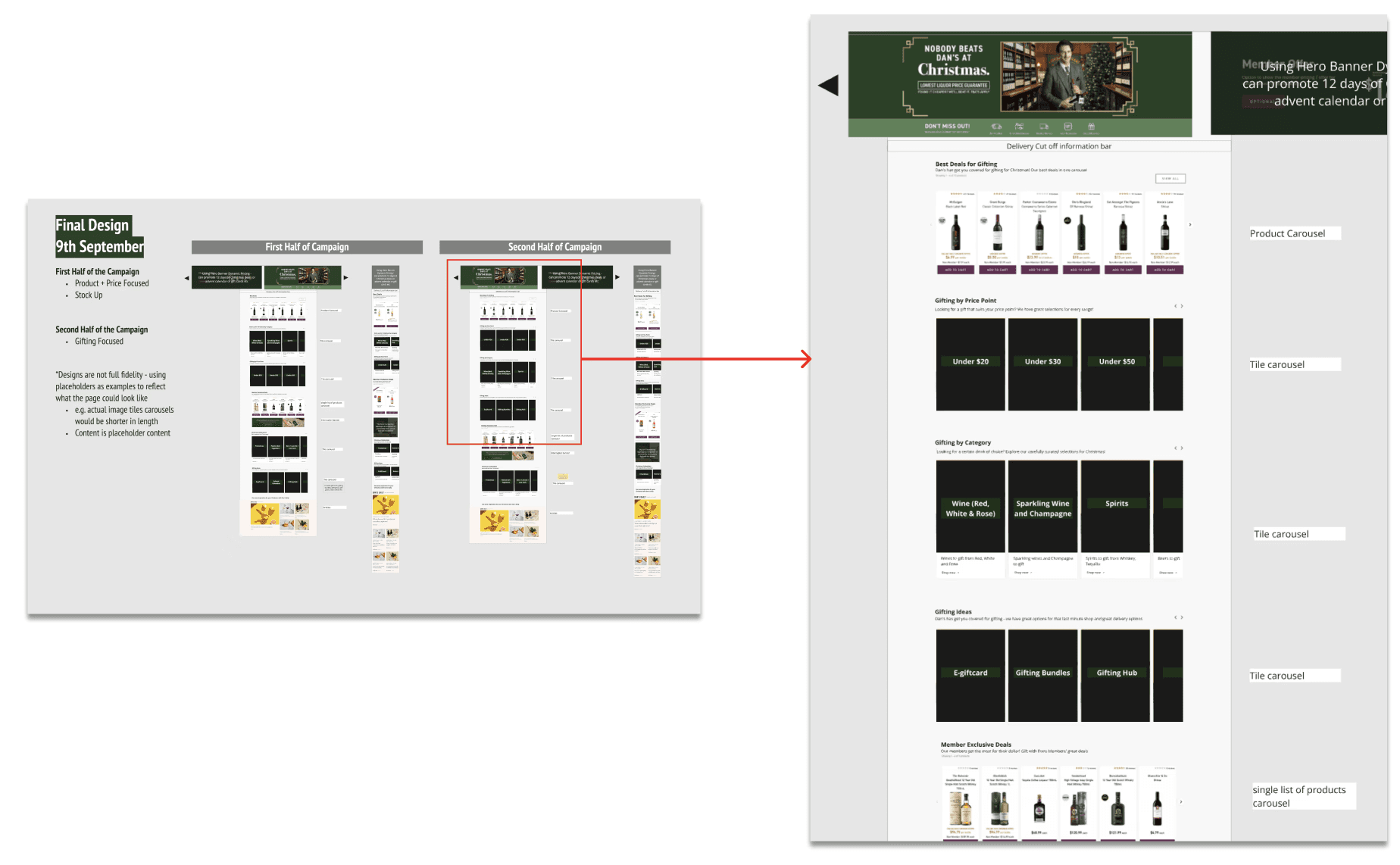
Special attention was given to visual rhythm and content density, ensuring that users could easily click and act.
I also designed the app landing experience, ensuring users could easily access the Christmas campaign from the Dan Murphy’s app. This included optimising entry points, aligning visuals with the web experience, and supporting seamless navigation across key seasonal missions.
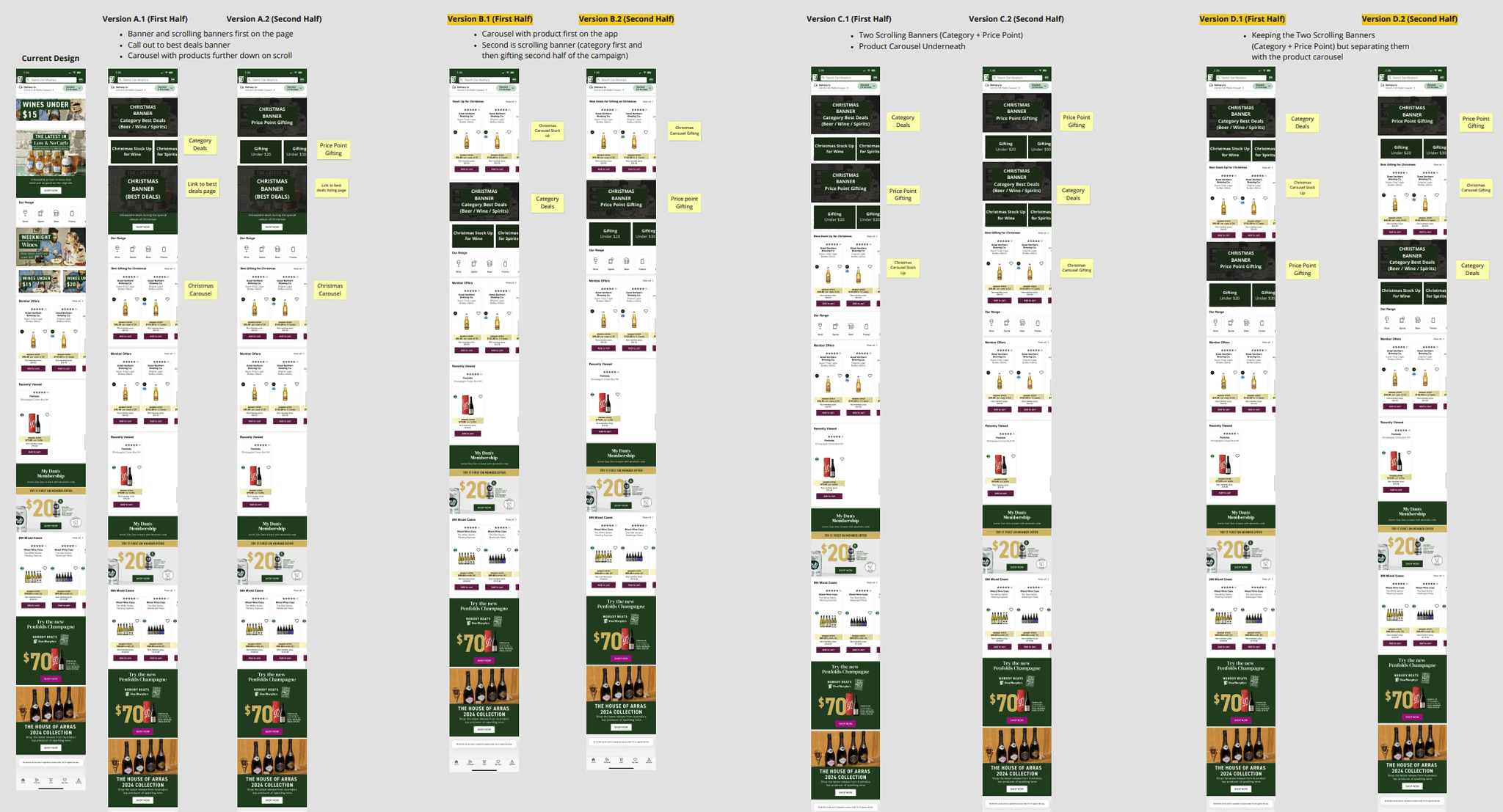
Throughout this entire process, I partnered with developers early to flag any constraints and collaborated with marketing leads to align design execution with campaign messaging and promotional timing.
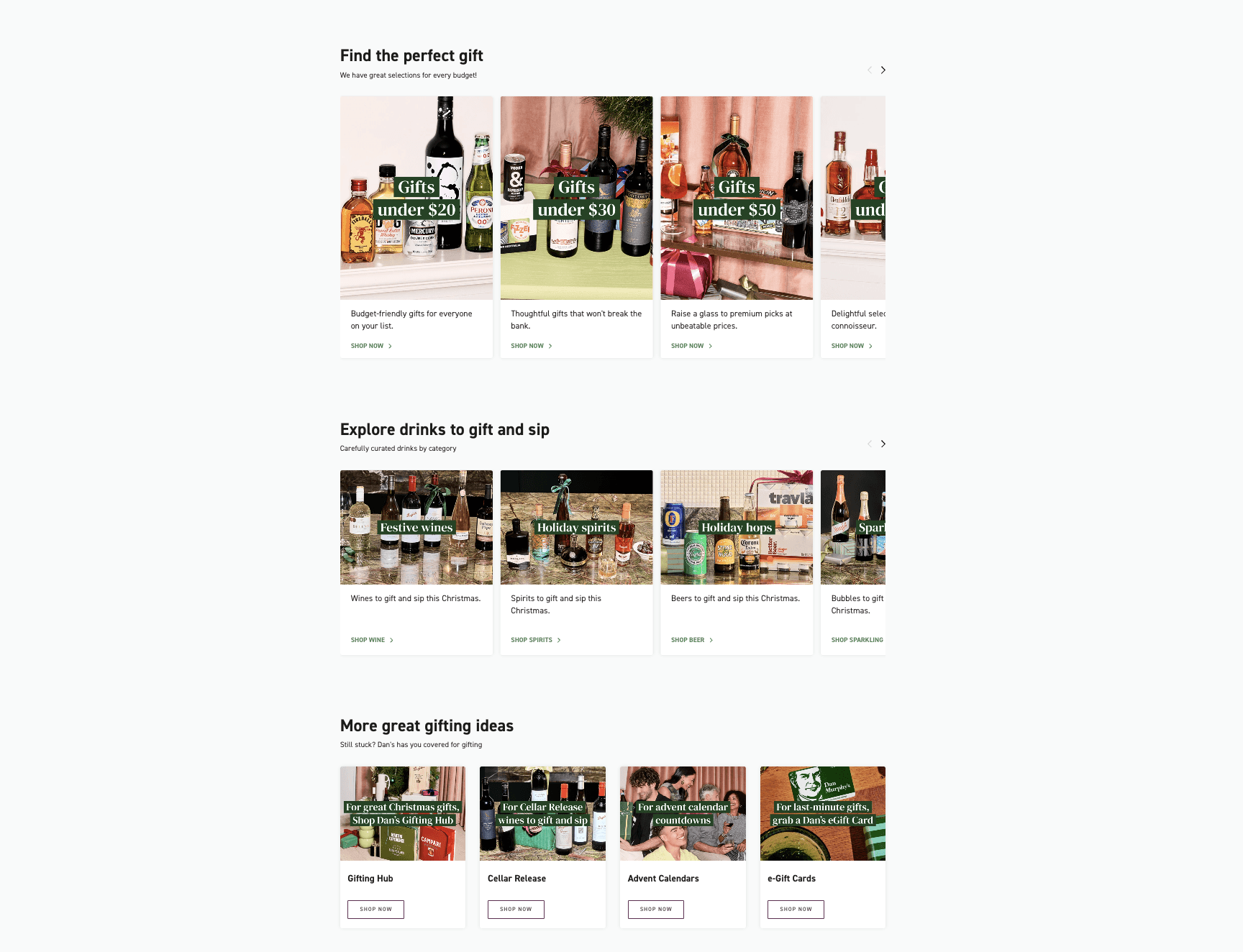
The final campaign design brought together high-performing modules tailored to seasonal missions, member value, and gifting behaviour. Key components included:
Best Deals Product Carousel – upfront value callout to drive engagement
Stock-Up by Alcohol Category – organised by shopper logic early in the campaign
Gifting by Price Point Carousel – surfaced in the second half to support gift hunting
Member Exclusive Deals – highlighted value for loyalty and retention
Member Interrupter Banner – ease of sign up to become member
Christmas Celebrations Section – promoted hosting and festive occasion planning
Gifting Ideas Carousel – featured eGift cards and links to the Gifting Hub
Dan’s Daily Articles – added inspiration and relevance through seasonal content
These elements combined to support customer missions, increase conversion, and reinforce Dan’s as the go-to destination for Christmas.
Presentations
To close out the project, I led final presentations of the Christmas campaign designs to both key business stakeholders and the internal design team.
Stakeholder Presentations and Wrap Up
I walked through the end-to-end UX journey, highlighting how the designs were shaped by data insights, user behaviour, and collaborative input from design jams and workshops.
The presentation focused on how the web and app experiences were strategically planned to support seasonal shopping missions, improve product discoverability, and drive conversion.
By clearly tying design decisions back to performance goals and research, I was able to demonstrate the value of a user-first, insight-led approach to campaign execution.
I presented the final designs through a recap-style deck that walked stakeholders through the full journey—from research and insights to ideation, iteration, and final experience decisions.
Results and Learnings
Results
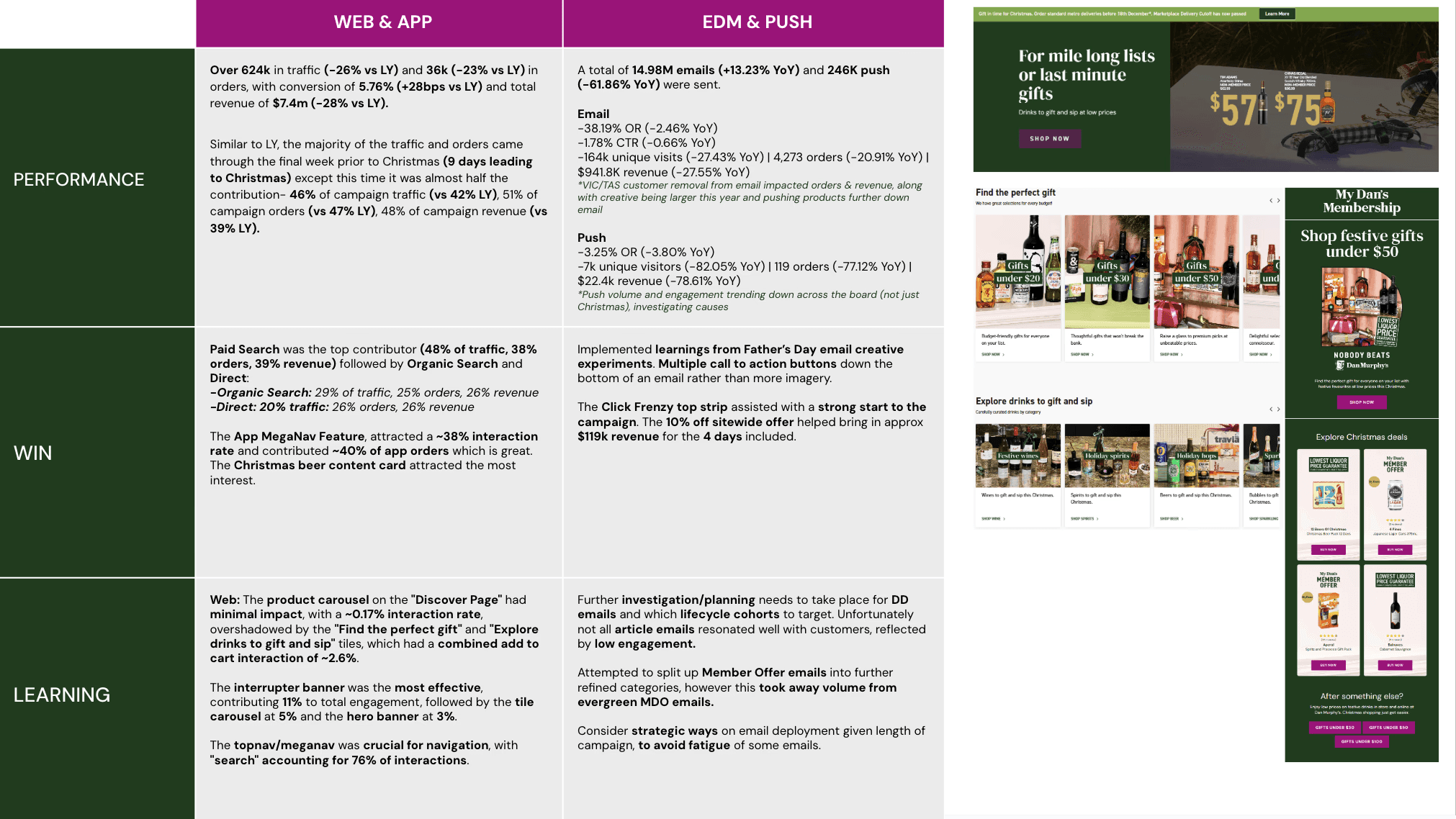
Despite an overall decline in traffic and orders year-on-year, the campaign achieved a conversion rate of 5.76%, up 28bps from the previous year, demonstrating that the optimised user experience played a direct role in driving better outcomes even with fewer visits.
Notably, the final nine days leading up to Christmas accounted for nearly half of the campaign’s success - 46% of traffic, 51% of orders, and 48% of revenue - outpacing the previous year.
This surge aligned with our UX strategy to shift the design focus towards last-minute gifting and hosting solutions in the latter half of the campaign.
Learnings
Some of the things that I learnt from working on this Campaign.
Innovation was unfortunately limited by feasibility
Ideas like “12 Days of Christmas” and in-campaign competitions were explored but deprioritised due to marketing and technical constraints
Would have served a better customer experience if we could have implemented these.
Mission-led content will outperform generic modules
The generic product carousel saw only ~0.17% interaction
Purposeful tiles like “Find the Perfect Gift” and “Explore Drinks to Gift and Sip” drove ~2.6% add-to-cart rate
Clear takeaway: content with intent drives stronger engagement
Timing is critical – UX must adapt to customer mindset
The final 9 days drove the majority of traffic, orders, and revenue
It is important for the UX focus to cater to specific missions based on customer need e.g. stock-up missions early to urgency and gifting in the final stretch
Mobile-first design was essential
With 20%+ of searches on mobile, seamless navigation and search optimisation are critical for capturing high-intent behaviour on small screens
Personalisation and dynamic content present future opportunities
If supported technically, we could have personalised components (e.g. relevant offers, trending gifts, or timing-based modules) to better support varied customer missions